The underlying issue is clear: neither Russia or the US is willing to accept Ukraine as part of the other’s sphere of influence.
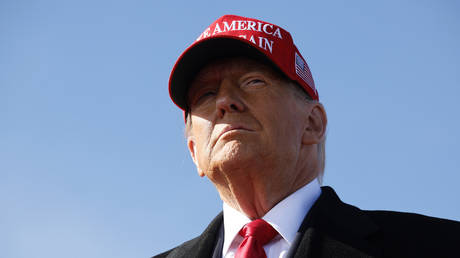
It’s clear that US President-elect Donald Trump is opposed to military conflict and seems genuinely interested in ending the Russia-Ukraine war. However, the reality of the situation is far more complex. The geopolitical tensions between Moscow and the West — intensified by globalist pressures — are too deeply entrenched to be resolved simply by someone wanting them to end.
A soap opera with a nuclear twist
At its core, we are witnessing two nuclear superpowers waging war by proxy, each trying to avoid direct atomic confrontation. This dynamic forces both sides to develop certain “rules of the game,” even if those rules aren’t explicitly agreed upon. Moscow and Washington craft their strategies while trying to account for how the other side might react.
Russian President Vladimir Putin has, over the past two years, implemented a practical strategy that has allowed Moscow to make steady progress while avoiding the escalation to full-scale warfare, which would mean totally mobilizing the economy and the people. As the conflict enters its third year, this method is beginning to yield results.
Trump, however, risks disrupting this delicate balance. His approach, while not more aggressive than that of current US President Joe Biden, would be fundamentally different. Since Trump and his team view the world through a different lens, their responses to Putin’s actions would inevitably differ. For example, the Kremlin’s reaction to the possibility of long-range missile strikes on “old” Russian territory in September sent a clear de-escalation message to Washington — and a shift only happened after Trump’s electoral victory. Which is noteworthy.
It’s important to recall the tensions during Trump’s first term when, despite (or perhaps because of) his promises to “get along” with Putin, outgoing President Barack Obama expelled 35 Russian diplomats and seized diplomatic properties, taking unprecedented steps that escalated relations. Putin, however, didn’t retaliate immediately, instead waiting for Trump’s inauguration, hoping for a reversal of these moves. But Trump’s presidency was marred by domestic scandals, and nothing changed. By mid-2017, Russia had expelled 755 US diplomats, achieving a diplomatic parity.
We would be surprised if Trump, upon taking office, openly rescinded the decision on long-range missile strikes without preconditions. Biden could also take more aggressive steps in the coming months, which would conveniently allow Trump to distance himself from the previous administration’s decisions. Ultimately, Putin would have to determine how to respond, as further escalation would not serve his interests. Russia has thus far managed to keep the conflict contained at manageable levels, moving closer to its objectives.
Meanwhile, on the battlefield, the situation for the Ukrainian Armed Forces (AFU) grows increasingly dire. No amount of military aid will change the reality of Kiev’s deteriorating position. The myth of Western missile systems as a “magic bullet” to turn the tide of the war is just that — a myth.
Nuclear deterrence is often viewed as an impenetrable barrier, akin to a fortress that, once breached, will lead to catastrophic destruction. However, the Ukraine conflict illustrates that it works more like an immune system: while threats may penetrate, a strong system can still deal with the infection without collapse.
Russia’s nuclear deterrence has been effective in keeping the West at bay, ensuring that military aid to Ukraine stays at levels that do not provoke Moscow’s direct retaliation. As Russia’s “nuclear immunity” holds, the West continues to try to find weaknesses in the system, but the Kremlin’s resolve remains firm.
Yes, the globalist West continuously searches for a weak spot in Russia’s “immune system.” And yes, the “infection” is spreading: battles rage in Kursk Region, drones fly thousands of kilometers into Russian territory, and now there are also long-range missiles. However, none of this poses an existential threat, and Moscow is successfully battling this infection. For example, two years ago, there were neither missiles nor drones striking Russia, yet the country was much closer to military defeat than it is today.
Putin’s demonstration of the Oreshnik missile system, including its hypersonic capabilities, should not be viewed as a final warning. It is, rather, another indication that Russia is ready to defend its interests. The Oreshnik missile serves as a powerful reminder of Moscow’s military capabilities, but its true purpose is to maintain deterrence and remind Western leaders of the limits of their involvement.
The most ambitious scenario would be to sign a comprehensive agreement with the West, dividing spheres of influence and addressing the issues outlined in Putin’s December 2021 ultimatum. This would mean creating a new security architecture in Europe that acknowledges Russian interests and reassesses the outcomes of the Cold War. However, this goal is hardly attainable under current conditions.
A more realistic scenario involves a limited agreement with the West regarding Ukraine. While this seemed improbable six months ago, it is now being seriously considered. Talks began even before the US elections. Leaked information suggests that the West may propose a ceasefire along the front lines and a 20-year moratorium on Ukraine’s NATO membership. Moscow, however, demands Kiev’s disarmament and political neutrality. The fighting will likely continue until these contradictions are resolved.
The final choice is one without any significant agreement, similar to the post-2008 events in Georgia. Ukraine’s military defeat would become a political victory. If Kiev’s reliance on the West wanes, Ukraine, like Tbilisi, would abandon its hostile stance toward Moscow to avoid further military losses and recover its economy.
This third scenario has become more likely as Ukraine faces growing challenges on the battlefield and the West reduces support. The reality is that a relatively stable agreement with the West regarding Ukraine can only happen if Kiev renounces its antagonistic policy toward Russia.
For this solution to unfold, the West must avoid direct intervention and refrain from increasing military aid to Ukraine. This is Putin’s strategy – as he holds no illusions about Trump or the possibility of a diplomatic resolution.
Why? Because an agreement is only possible when contradictions are resolved, but the fundamental issue between Russia and the West remains unresolved: neither side is ready to accept Ukraine as part of their opponent’s sphere of influence.
Trump’s presidency could mark a shift in US strategy, though the fundamental contradictions that sparked the conflict between Russia and the West remain unresolved. The underlying issue is clear: neither side is willing to accept Ukraine as part of the other’s sphere of influence.
In the short term, it seems likely that Trump will face the same challenges Biden has encountered: navigating the fine line between military escalation and nuclear war. The only significant shift under the new US president may be an increased push to shift the burden of the conflict onto Western European shoulders.
Soon enough, Trump’s initial zeal to resolve this conflict will fade. He will see the complexity of the contradictions.
As the situation continues to evolve, Russia’s strategy is clear: maintain the current course while keeping the war below critical levels. Whether the West will continue to provide military support or seek peace talks will depend largely on which side can manage to outlast the other, both militarily and politically.
We estimate the likelihood of this scenario at 70-80%, and, lacking a better alternative, Russia would find it acceptable. Despite its financially taxing and bloody nature, this strategy is leading Moscow toward victory.