Beijing maintains a conservative economic agenda in its relations with the continent, while finding it increasingly difficult to avoid a political confrontation with the West
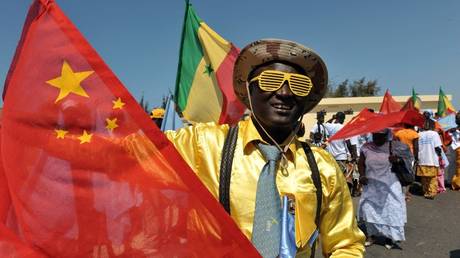
The ninth forum on China-Africa Cooperation (FOCAC) and the FOCAC summit held in Beijing on September 4-6 marked a significant phase in Africa’s relations with its global partners in the post-Covid era. China is the last major partner to hold a summit with African nations following the end of the pandemic; Africa summits were held by the EU and the US in 2022, and by Russia in 2023. The pandemic, coupled with rising global tensions, macroeconomic shifts, and a series of crises, underlined Africa’s growing role in the global economy and politics – something that China, which has undergone major changes (both internal and external) as a result of the pandemic, is well aware of.
It is clear that the relationship between China and Africa is entering a new phase. China is no longer just a preferential economic partner for Africa, as it had been in the first two decades of the 21st century. It has become a key political and military ally for many African countries. This is evident from China’s increasing role in training African civil servants and sharing expertise with them, as well as from several initiatives announced at the summit, including military-technical cooperation: officer training programs, mine clearing efforts, and over $100 million which China will provide to support the armed forces of African nations.
In the political arena, however, Beijing is proceeding very cautiously and the above-mentioned initiatives should be seen as the first tentative attempts rather than a systematic strategy.
While China strives to avoid political confrontation with the West in Africa and even closely cooperates with it on certain issues, it is becoming increasingly difficult to do so. Washington is determined to pursue a policy of confrontation with Beijing in Africa – this is evident both from US rhetoric and its strategic documents.
A “divorce” between China and the West is almost inevitable. This means that Chinese companies may lose contracts with Western corporations and won’t have access to transportation and logistics infrastructure. Consequently, China will need to develop its own comprehensive approach to Africa, either independently or in collaboration with other global power centers.
An important sign of the growing confrontation between the US and China in Africa was the signing of a trilateral memorandum of understanding between China, Tanzania, and Zambia regarding the reconstruction of the Tanzania-Zambia Railway (TAZARA), which was originally built by China in the 1970s. If it is expanded, electrified, and modernized, TAZARA has the potential to become a viable alternative to one of the key US investment projects in the region: the Lobito Corridor, which aims to enhance logistics infrastructure for exporting minerals (copper and cobalt) from the Democratic Republic of the Congo and Zambia by modernizing the railway from the DR Congo to the Angolan port of Lobito.
In inland regions such as Eastern Congo, transportation infrastructure plays a crucial role in the process of mineral extraction. Considering the region’s shortage of rail and road networks, even a single non-electrified railway line leading to a port in the Atlantic or Indian Ocean can significantly boost the operation of the mining sector and permanently tie the extraction and processing regions to specific markets.
It appears that China’s initiative holds greater promise compared to the US one, particularly because Chinese companies control major mines both in the Democratic Republic of the Congo and Zambia. This gives them a clear advantage in working with Chinese operators and equipment, facilitating the export of minerals through East African ports. Overall, this indicates that East Africa will maintain its role as the economic leader on the continent and one of the most integrated and rapidly developing regions for imports.
The highlight of the summit was China’s pledge to provide $50 billion to African countries over the next three years (by 2027). This figure echoes the $55 billion commitment to China made by the US (for 3 years) at the 2022 US-Africa Summit and the $170 billion that the EU promised to provide over seven years back in 2021. Consequently, leading global players allocate approximately $15-20 billion annually to Africa.
In recent years, there has been noticeable growth in such promises. Nearly every nation is eager to promise Africa something – for example, Italy has pledged $1 billion annually. However, these large packages of so-called “financial aid” often have little in common with actual assistance, since they are typically commercial loans or corporate investments. Moreover, a significant portion of these funds is spent in the donor countries (e.g. on the procurement and production of goods), which means that they contribute to the economic growth of African nations in a minimal way.
As for China, it will provide about $11 billion in genuine aid. This is a substantial amount which will be used for developing healthcare and agriculture in Africa. Another $30 billion will come in the form of loans (roughly $10 billion per year) and a further $10 billion as investments.
The overall financial framework allows us to make certain conclusions, though it’s important to note that the methodology for calculating these figures is unclear, and the line between loans, humanitarian aid, and investments remains blurred. In terms of investments (averaging around $3 billion per year), Beijing plans to maintain its previous levels of activity – in recent years, China’s foreign direct investments (FDI) have ranged from $2 billion to $5 billion annually. Financial and humanitarian aid could nearly double (from the current $1.5 billion-$2 billion per year) while lending is expected to return to pre-pandemic levels (which would still be below the peak years of 2012-2018).
China’s economic plan for Africa seems to be quite conservative. It’s no surprise that debt issues took center stage during the summit. During the Covid-19 pandemic, macroeconomic stability in African countries deteriorated, which led to challenges in debt repayments and forced Africa to initiate debt restructuring processes assisted by the IMF and the G20. Starting in 2020, a combination of internal and external factors led China to significantly cut its lending to African countries – from about $10-15 billion down to $2-3 billion. This reduction in funding has triggered economic reforms in several African countries (e.g. Ghana, Kenya, and Nigeria), which have shifted toward stricter tax and monetary policies. While promises to increase lending may seem like good news for African nations, it’s likely that much of this funding will go toward interest payments on existing obligations and debt restructuring, since China wants to ensure that its loans are repaid.
Despite China’s cautious approach to Africa, its interaction with the continent will develop as a result of external and internal changes affecting both Africa and China. Africa will gradually become more industrialized and will reduce imports while the demand for investments and local production will increase. China will face demographic challenges, and its workforce will decrease. This may encourage bilateral cooperation as some production facilities may move from China to Africa. This will most likely concern East African countries such as Ethiopia and Tanzania, considering China’s current investments in their energy and transportation infrastructure. Additionally, with Africa’s population on the rise and China’s population declining, Beijing is expected to attract more African migrant workers to help address labor shortages.