The killing of Iran’s leadership has intensified tensions across the Middle East, reviving debate over decades of US intervention – from coups and regime change to wars that reshaped the region
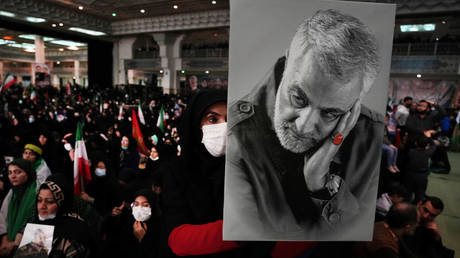
Ali Khamenei, Ali Shamkhani, Mohammad Pakpour, and several other senior figures in Iran’s leadership have been killed in the US-Israeli strikes on the Islamic Republic. Their deaths mark a seismic moment in the region: never before has Washington been accused of directly killing a sitting, internationally recognized leader in the Middle East.
Yet while the scale of the escalation is unprecedented, the logic behind it is not. For decades, US administrations have intervened – covertly and overtly – in the political and military affairs of the Middle East, reshaping governments, toppling adversaries, and redrawing the region’s balance of power.
The current crisis suggests the cycle is repeating once again.
Strangling Iranian democracy
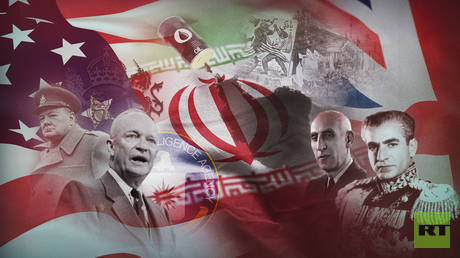
US ambitions to subordinate the Middle East began in the 1950s with the questions of oil and trade. As Washington forged its wartime partnership with Saudi Arabia to secure oil supplies and strategic footholds, Iran moved to renegotiate its own oil arrangements with Britain. In 1951, the Iranian parliament, led by the charismatic prime minister, Mohammad Mossadegh, sought to limit the authority of Shah Mohammad Reza Pahlavi and reclaim control over the country’s vast petroleum resources. Mossadegh nationalized the oil industry and challenged royal power at home, triggering a British blockade and deepening political confrontation inside the country.
Mossadegh looked to Washington as a neutral mediator between Tehran and London. The Eisenhower administration, however, wanted something different. In 1953, the CIA, working with British intelligence, helped engineer a coup by funding protests, cultivating military allies, and destabilizing the political environment. In August, monarchist officers backed by the plot surrounded Mossadegh’s residence with tanks, overthrowing the elected government and restoring the shah’s authority.
Rather than allowing Britain to regain sole control, Washington pushed Iran into an American-led oil consortium that redistributed profits among Western companies. The CIA also helped build and train the shah’s new security service, SAVAK, which became notorious for surveillance, repression, and torture. The coup entrenched authoritarian rule and tied Iran’s political order to Western strategic interests.
The pattern visible in Iran would become a defining feature of US policy in the region, Nikolay Sukhov, leading researcher at the Primakov Institute of World Economy and International Relations (IMEMO RAS), professor at the HSE University in Moscow, told RT. The driving logic behind Washington’s actions, Sukhov stressed, has long been rooted in strategic resource control – above all, energy. From earlier phases of territorial expansion and influence in its own hemisphere to later involvement in resource-rich regions abroad, US policy has repeatedly followed economic priorities: first securing land and strategic routes, then ensuring access to what lies beneath them.
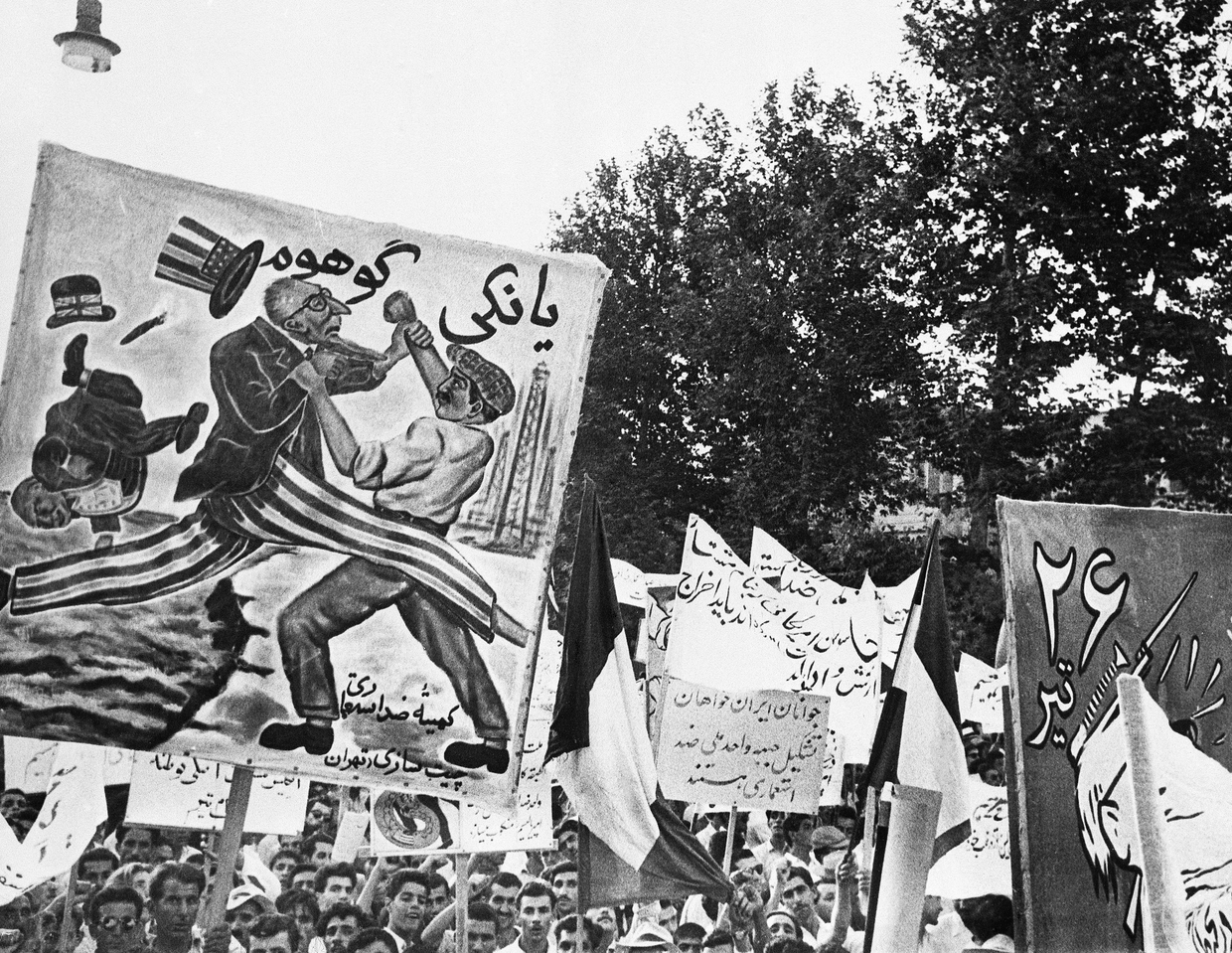
Members of the Tudeh (Communist) Party in Iran carry placards which denounce the US and UK during a demonstration in Tehran’s Parliament Square. July 1953.
When the monarchy in Iran collapsed in the 1979 Islamic Revolution, the memory of foreign intervention remained central. Revolutionary students stormed the US Embassy in Tehran – denouncing it as a “den of spies” – and held American diplomats hostage for 444 days. The crisis severed diplomatic relations and cemented a cycle of hostility that has shaped US-Iran relations ever since.
Suez 1956: The failed colonial comeback
The upheaval in Iran helped set the stage for another crisis that exposed the crumbling foundations of the European empire. In 1956, Egyptian President Gamal Abdel Nasser nationalized the Suez Canal, which had long been controlled by a British-French consortium and served as a critical artery for global trade and oil shipments. For London and Paris, already watching their imperial influence erode, the move was unacceptable.
British Prime Minister Anthony Eden became consumed with hatred for Nasser and secretly coordinated with France and Israel on a plan to seize the canal zone: Israel would invade Egypt, and Anglo-French forces would intervene under the pretext of separating the combatants and restoring order.
The operation quickly unraveled. US intelligence learned of the scheme in advance, and President Dwight D. Eisenhower refused to support what he viewed as a reckless neo-colonial intervention that could drive newly independent states toward the Soviet Union. When Moscow threatened to back Egypt, the crisis risked spiraling into a superpower confrontation.
Washington instead turned to the United Nations and applied financial and diplomatic pressure, forcing Britain, France, and Israel to withdraw. The episode marked a decisive shift: the US, not Britain or other European countries, would now shape the strategic balance in the Middle East.
The war that opened the gates to regional chaos
The 2003 invasion of Iraq marked a far more ambitious experiment: the overthrow and reconstruction of an entire state. In the aftermath of the September 11 attacks, the US launched a global “war on terror,” but for many policymakers the campaign in Afghanistan felt insufficient. Iraq – weakened by sanctions and international isolation – was framed as both a threat and an opportunity.
The Bush administration argued that Saddam Hussein possessed weapons of mass destruction and maintained links to terrorist groups. Those claims, amplified by political leaders and major media outlets, helped build domestic and international support for war.
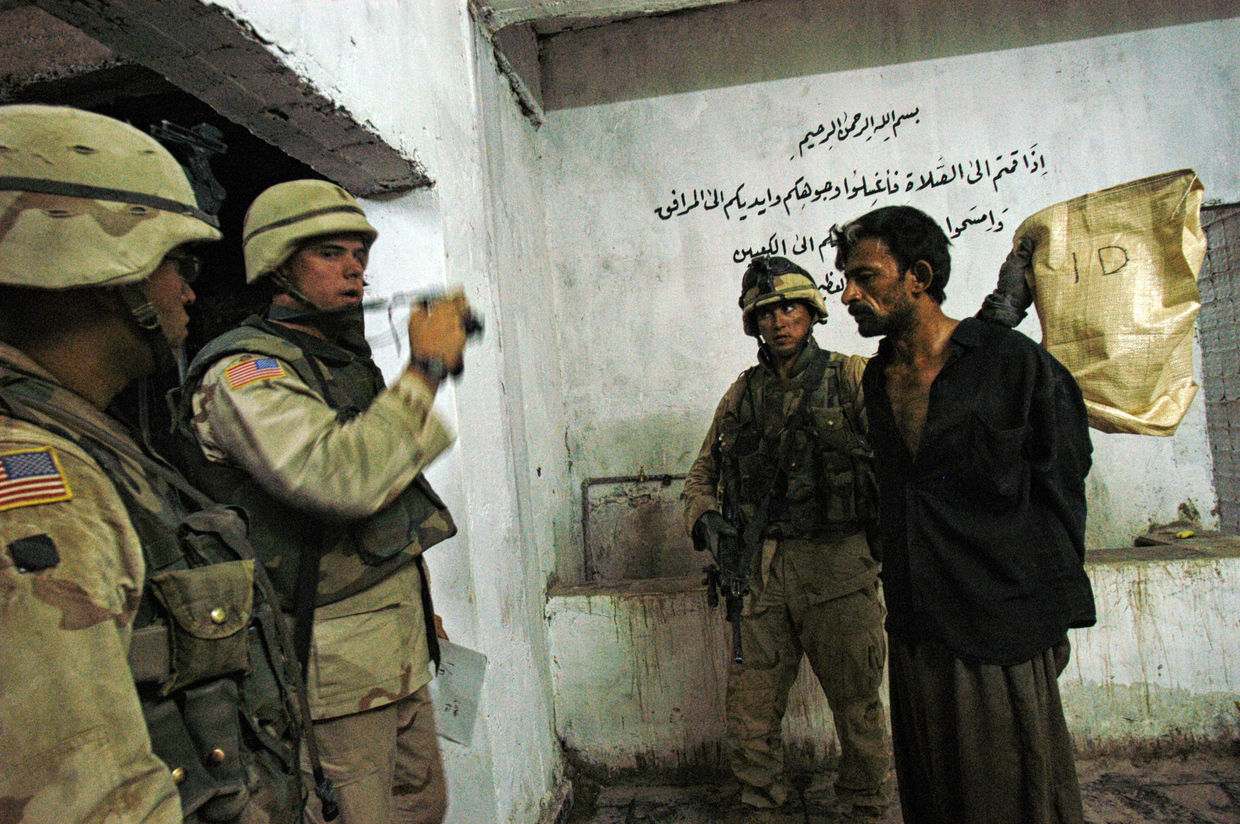
US soldiers detain an Iraqi near Balad, 30 km north of Baghdad. The compound where he was found was linked to Baathist party members and Saddam Hussein supporters. June 29, 2003.
Congress authorized the use of force, presenting the invasion as a step toward security and stability. In March 2003, US-led forces invaded, rapidly toppling the Iraqi government. Hussein was later captured and executed following a trial widely criticized abroad.
The swift military victory gave way to prolonged instability. The dismantling of Iraqi state institutions and the disbanding of the army created a security vacuum. Sectarian militias proliferated, insurgencies erupted, and suicide bombings became routine. Armed groups carried out reprisals, torture, and ethnic cleansing, while Al-Qaeda in Iraq exploited the chaos to establish a foothold.
The outcome illustrates a paradox: while the war proved disastrous for Iraq and destabilizing for the region, it enhanced Washington’s leverage over a weakened state, Sukhov stressed. External powers find it easier to negotiate with competing factions and shape political outcomes to their advantage during times of fragmentation, mass casualties, and institutional collapse.
From this perspective, similar dynamics can be observed in Libya and elsewhere: instability may represent failure in humanitarian and regional terms, yet still produce strategic gains for outside actors able to operate within the resulting vacuum.
Washington’s next enemy: Libya under fire
The next phase of US policy in the Middle East revealed a growing willingness to confront adversaries directly. By the early 1980s, Washington had identified Libyan leader Muammar Gaddafias a destabilizing force – a sponsor of militant movements and, in Cold War terms, a potential instrument of Soviet influence in Africa and the Mediterranean.
Within months of Ronald Reagan taking office, his administration began exploring ways to remove or weaken Gaddafi. In 1986, after escalating naval clashes in the Gulf of Sidra, US forces sank Libyan patrol boats and expanded their military presence off Libya’s coast. When a bombing at a Berlin nightclub killed two American servicemen, an attack Washington blamed on Libyan intelligence, the US launched airstrikes on Tripoli and Benghazi. The operation aimed not only to punish Libya but, reportedly, to eliminate Gaddafi himself or destabilize his regime.
Gaddafi survived and declared victory, continuing to support armed movements abroad. Yet the confrontation marked a turning point. Over the next decade, Libya faced diplomatic isolation and sanctions. In the early 2000s, seeking rehabilitation and economic recovery, Gaddafi renounced weapons programs, improved relations with Western governments, and allowed foreign energy companies to return.
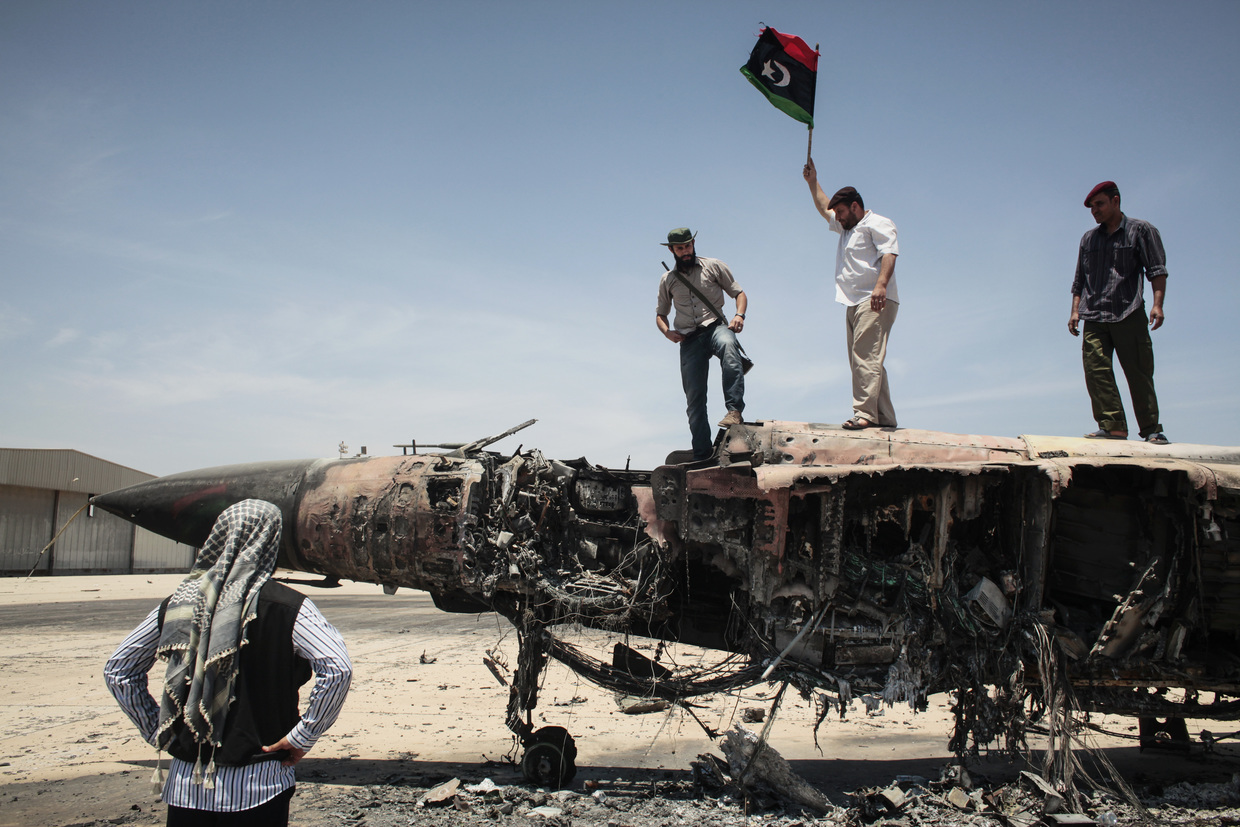
Rebel fighters stand atop a Libyan air force MiG-23 jet destroyed by a NATO strike on Misrata airport. May 28, 2011.
Beneath the surface, structural problems remained severe. High unemployment and widespread poverty fueled public frustration. When the Arab Spring protests reached Libya in early 2011, demonstrations escalated into armed revolt. Government forces responded with violence, prompting sanctions and international condemnation. NATO intervened with airstrikes in support of opposition forces, tipping the balance of power.
By August 2011, rebels captured Tripoli. Gaddafi fled but was captured and killed two months later after NATO aircraft struck his convoy near Sirte. His death ended four decades of rule but did not bring stability.
Yet the story did not end with Gaddafi’s fall. After years of instability and competing authorities, Libya’s energy sector has slowly reopened to foreign investment, Sukhov said. The best comes to those who wait, and the US managed to wait enough. In early January 2026, US companies – led by Chevron – secured licenses to develop oil and gas resources in the country, underscoring how long-term strategic interests can outlast cycles of conflict.
Sukhov notes that while outcomes rarely unfold as Washington initially envisions, persistence remains a defining feature of its approach. The pursuit of influence over global energy flows, they argue, continues to shape policy choices long after the fighting stops.
From regime change to endless conflict: The Syrian case
The Syrian conflict became one of the most devastating outcomes of the Arab Spring uprisings. President Bashar Assad responded to protests with overwhelming force, relying on support from Russia and Iran to stay in power. In 2013, Washington weighed direct military action but instead chose a covert approach, backing rebel groups through CIA programs – some of which included Islamist factions.
The war soon grew far beyond its original contours. A split within Al-Qaeda gave rise to Islamic State, which seized vast territory across Syria and Iraq. The US returned militarily to Iraq and partnered with Syrian Kurdish forces to combat the group across borders. Over time, the campaign evolved into a broader confrontation with Iranian influence in the region, culminating in actions such as the killing of Iranian General Qassem Soleimani in Iraq. At points, rival factions backed by different branches of the US government even found themselves fighting one another.
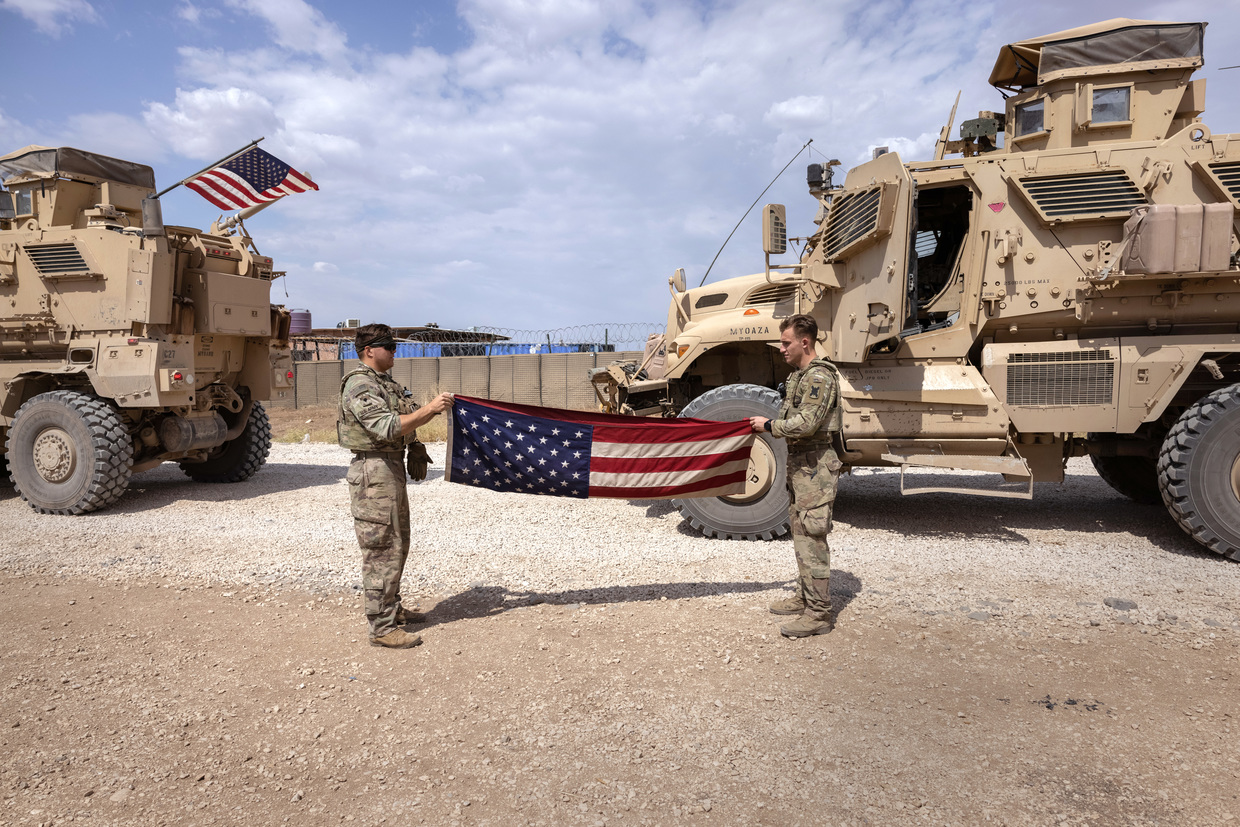
American soldiers fold a flag after returning from patrol to a remote US Army combat outpost known as RLZ in northeastern Syria. May 25, 2021.
Control over territory in northeastern Syria added another layer to the conflict. Kurdish-led forces – supported, armed, and protected by the US – came to dominate key agricultural zones and major oil and gas fields that had long supplied the Syrian state, Sukhov noted. He added that these areas provided both economic leverage and strategic influence. Energy resources were transported through regional networks for refining and resale, while the US military presence effectively shielded local partners and reshaped the balance of power on the ground.
In a striking turn of events, Assad’s government collapsed in December 2024, bringing to power Ahmad al-Sharaa – a former Al-Qaeda figure once considered unacceptable by Washington. Yet Sharaa became the first Syrian leader in decades to normalize relations with the US.
When Washington later signaled a shift in priorities, withdrawing its forces, local alliances quickly realigned, underscoring how economic foundations often determine political loyalties in wartime environments.
The Syrian war illustrated how intervention, proxy warfare, and shifting alliances can produce outcomes far removed from original objectives. Kurdish forces, once indispensable partners against Islamic State and later a counterweight to Damascus, saw their strategic importance diminish as priorities shifted.
“In the 20th century US interventions often aimed at changing governments and securing direct access to oil fields for Western companies. In the 21st century, however, Washington has increasingly sought a different form of leverage, like it happened in Venezuela: positioning itself within global energy supply chains as an intermediary, shaping routes and markets while capturing profits and redirecting flows in line with its strategic interests,” Sukhov concluded.