Sovereignty doesn’t mean obedience, and New Delhi knows it
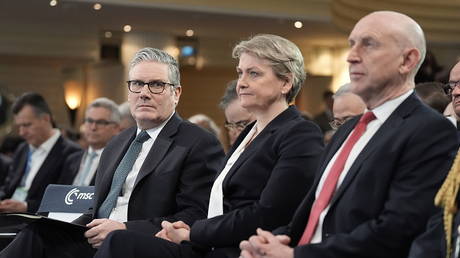
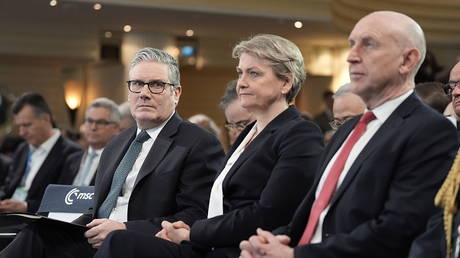
A sharp exchange between American and Indian representatives at last weekend’s Munich Security Conference offered a revealing snapshot of how the emerging world order actually functions. Following the line set by his boss, US President Donald Trump, US Secretary of State Marco Rubio claimed that New Delhi had promised Washington it would stop buying Russian oil.
Soon after, speaking at another panel, Indian Foreign Minister Subrahmanyam Jaishankar declined to confirm any such commitment. India, he said, would make its own decisions, “which may not always be to your liking.” Everyone, he added, would have to live with that.
The truth, as usual, likely lies somewhere in between. But the episode is less about who said what than about a deeper, systemic issue.
India has found itself, somewhat unexpectedly, at the center of Washington’s attempt to construct an international regime tailored to US interests. This is not a world order in the classical sense, with rules accepted as legitimate by all. It is a looser, more transactional system of relationships with major states, designed to maximize American political and economic advantage.
The surge in trade between Russia and India in recent years, above all through Russian energy exports, has naturally drawn the White House’s attention. But the pressure on New Delhi goes beyond oil. India is one of the most populous, fastest-growing, and strategically important powers of the coming decades. Integrating it into a US-centric framework would be a prize in itself. Not to mention an instructive precedent for others.
The Russian angle is especially convenient. It can be framed as part of a supposedly noble effort to bring peace to Ukraine, rather than as naked economic coercion. Unlike other manifestations of Trumpism, which are openly mercantilist, this one can be wrapped in moral language. At the same time, Russia and India genuinely share a long-standing relationship, built over decades through political trust and mutual sympathy, at least insofar as such sentiments exist between states. Precisely because that relationship is stable and resilient, it is all the more tempting for Washington to weaken it and redirect it to its own advantage.
India is a founding member of BRICS, a rising global actor with ambitions commensurate to its size. A country of this stature cannot simply follow someone else’s instructions. By definition, it is sovereign and it regularly reminds the world of that fact.
Yet sovereignty does not imply limitless freedom of action. India’s room for maneuver is constrained by economic realities, strategic dependencies, and regional rivalries. Independence, in practice, requires flexibility: a constant balancing between what is desirable and what is achievable.
From a purely economic standpoint, buying Russian oil – clearly cheaper than many alternatives – makes eminent sense for India. Sustained growth is essential for a country with a vast, still-disadvantaged population and the ever-present risk of social instability. At the same time, the United States is India’s largest trading partner, an indispensable factor not only economically but also strategically. China, meanwhile, is both a key economic partner within the non-Western world and India’s principal geopolitical and military rival. The resulting picture is anything but simple.
Jaishankar’s remark that India would take decisions “you will not like” was aimed squarely at Western audiences. It was a reminder not to expect obedience. Yet the same logic can be applied elsewhere. Moscow, too, is watching uneasily as India trims Russian oil purchases under US pressure. From a Russian perspective, such maneuvering – one might more bluntly call it opportunism – can look like a lack of sovereignty, a willingness to accommodate another power’s interests at one’s own expense.
But this judgment reflects a specifically Russian understanding of sovereignty. Shaped by history, Russia’s conception is rigid and uncompromising, defined by resistance to external influence in almost any form. This approach is increasingly rare in an interconnected world.
India’s understanding, like that of many other states, is different. Sovereignty does not necessarily mean refusing to bend under pressure; it means finding ways to realize one’s interests under less-than-ideal conditions. The core of those interests is internal stability and continued development, priorities that have become even more urgent amid global turbulence.
Domestic cohesion has always mattered. Today, however, interdependence magnifies its importance. Internal unrest now interacts with external shocks, amplifying their destabilizing effects. For most governments, preserving the social and political balance at home takes precedence over abstract principles or ideological consistency.
This is the practical reality of what is often called a multipolar world. Strip away the rhetoric, and it operates according to an old rule, newly repackaged in modern language: look after your own first. The so-called global majority follows precisely this logic. States pursue their interests as they understand them, adjusting to circumstances rather than clinging to dogma.
When dealing with partners, a calm, unsentimental approach is therefore essential. Acting in one’s own interest is not cynicism; it is normal state behavior. Russia must do the same; steadily, confidently, and without illusions. Whether others approve is secondary. What matters is trusting one’s own judgment and acting accordingly.
This article was first published by Russia in Global Affairs, translated and edited by the RT team