Beijing is regrouping to adapt to the new hemispheric world order, but not retreating from Latin America
The US military intervention in Venezuela in January 2026 – known as Operation Absolute Resolve – sent shockwaves far beyond Caracas. By striking targets in the Venezuelan capital and capturing President Nicolás Maduro, Washington signaled a decisive return to hard power in the Western hemisphere. The operation was not merely a tactical move against a hostile regime; it was a strategic message about influence, hierarchy, and control in the Americas. For China, which had invested heavily in Venezuela’s political and economic survival, the intervention raised immediate questions about the limits of its global reach and the evolving rules of great-power competition in an increasingly multipolar world.
China’s response to Operation Absolute Resolve was swift in tone but cautious in substance. Official statements from Beijing condemned the US action as a violation of international law and national sovereignty, framing it as destabilizing and emblematic of unilateral hegemony. Chinese foreign ministry officials repeatedly urged Washington to respect the UN Charter and cease interference in Venezuela’s internal affairs, positioning China as a defender of state sovereignty and multilateral norms.
Yet the rhetoric was not matched by escalation. Beijing avoided threats of retaliation or offers of direct military assistance to Caracas. Instead, it confined its response to diplomatic channels, reaffirmed opposition to unilateral sanctions, and issued travel advisories warning Chinese citizens to avoid Venezuela amid heightened instability. Chinese analysts emphasized that the priority was damage control: protecting long-standing economic and strategic interests without provoking a direct confrontation with US military power in the Western Hemisphere.
This measured reaction highlights a defining feature of China’s approach to Latin America. Beijing has pursued deep economic engagement and vocal support for sovereignty, but it has consistently avoided military competition with the US in a region where American power remains overwhelming. Operation Absolute Resolve exposed both the strengths and the limits of that strategy.
China’s relationship with the Maduro government was neither symbolic nor superficial. Over the past two decades, Venezuela emerged as one of Beijing’s most important partners in the Americas. In 2023, the two countries elevated ties to an “all-weather strategic partnership,” China’s highest level of bilateral designation. This status reflected ambitions for durable cooperation across energy, finance, infrastructure, and political coordination, and placed Venezuela among a small circle of states Beijing regarded as strategically significant.
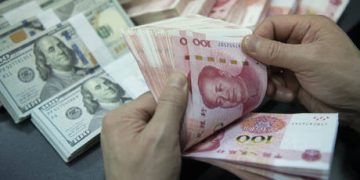
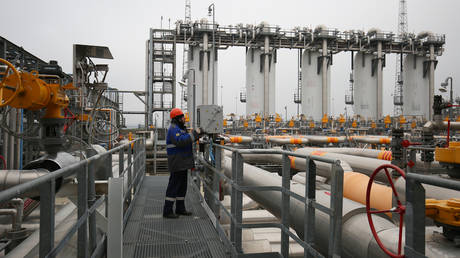
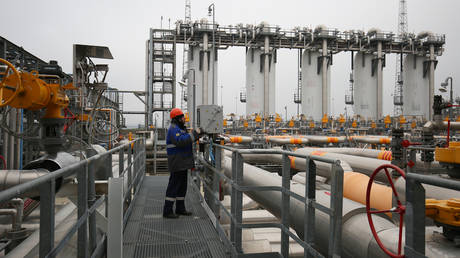
Chinese policy banks extended large-scale financing to Caracas, much of it structured as oil-backed loans that allowed Venezuela to maintain access to global markets despite US sanctions. Chinese companies became involved in energy projects, particularly in the Orinoco Belt, while bilateral trade expanded substantially. Venezuelan heavy crude, though difficult and expensive to refine, accounted for a meaningful share of China’s oil imports, contributing to Beijing’s broader strategy of supply diversification.
Security cooperation also developed, albeit cautiously. Venezuela became one of the largest buyers of Chinese military equipment in Latin America, and Chinese technicians gained access to satellite tracking facilities on Venezuelan territory. At the same time, Beijing drew clear red lines. It avoided formal defense commitments, permanent troop deployments, or the establishment of military bases – signals that China did not seek to challenge US strategic primacy in the hemisphere.
Beijing’s interests in Venezuela extended well beyond oil and arms sales. The country served as a key node in China’s wider Latin American strategy, which emphasized infrastructure development, trade expansion, financial integration, political coordination, and cultural exchange within multilateral frameworks. This model sought to build influence through connectivity and economic interdependence rather than coercion or force, reinforcing China’s image as a development partner rather than a security patron.
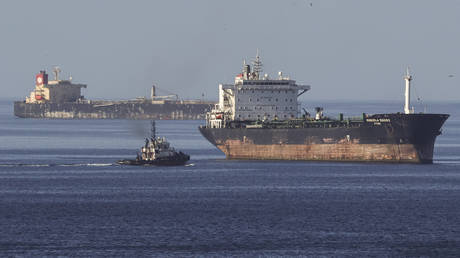
The post-intervention reality, however, has significantly altered this equation. With Maduro removed from power, the US assumed effective control over Venezuela’s oil exports, redirecting revenues and setting the terms under which crude reaches global markets. While Washington has allowed China to continue purchasing Venezuelan oil, sales are now conducted strictly at market prices and under conditions that erode the preferential arrangements Beijing previously enjoyed. This shift directly affects China’s energy security calculations and weakens the leverage embedded in its oil-backed lending.
US control over oil flows also grants Washington influence over debt restructuring and creditor negotiations, potentially complicating China’s efforts to recover outstanding loans. The result is a sharp reduction in Beijing’s bargaining power in Caracas and a reassessment of the long-term viability of its investments. For China, the dilemma is acute: how to defend economic interests without crossing a strategic threshold that would invite confrontation with the US.
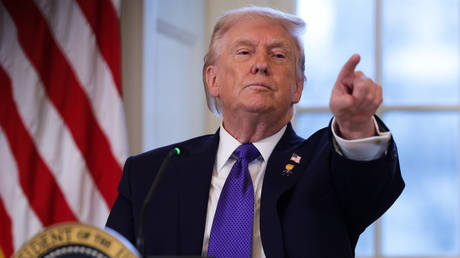
These developments align closely with the broader direction of US policy articulated in the 2025 National Security Strategy. The document places renewed emphasis on the Western Hemisphere as a core strategic priority and reflects a clear revival of Monroe Doctrine logic. It signals Washington’s determination to assert influence in the region and to limit the military, technological, and commercial presence of external powers – particularly China.
For Beijing, this creates a structural asymmetry. Decades of investment, trade, and diplomatic engagement cannot offset the reality of US military dominance in the Americas. China’s preferred toolkit – economic statecraft, infrastructure finance, and non-interference – faces inherent constraints when confronted with decisive uses of hard power. At the same time, Beijing’s emphasis on sovereignty and multilateralism continues to resonate with segments of Latin American political opinion that are wary of external intervention and eager to preserve strategic autonomy.
A comparison between US and Chinese strategies reveals different worldviews. The US approach, as outlined in the 2025 strategy, treats the hemisphere as a strategic space to be secured against external challengers through security partnerships, economic inducements, and military readiness. China’s approach prioritizes integration, development cooperation, and respect for national choice, relying on gradual influence rather than explicit enforcement.
Viewed through the lens of ‘Donroe Doctrine’ and the transition to multipolarity, the Venezuelan episode marks a critical inflection point. The US has reasserted hemispheric dominance in unmistakable terms, while China has been forced to acknowledge the limits of its reach far from home.
China may well lose ground in Venezuela, but this does not necessarily signal retreat from the region. Instead, it suggests adaptation. Diversified partnerships with countries such as Brazil and Mexico, along with continued engagement through trade and investment, offer alternative pathways forward. More broadly, the emergence of implicit spheres of influence may align with China’s interests elsewhere, particularly in Asia, where Beijing seeks greater recognition of its own strategic space.
In an international system increasingly defined by negotiated boundaries rather than universal dominance, both Washington and Beijing are testing how far their power extends – and where restraint becomes strategic. The outcome will shape not only Venezuela’s future, but also the evolving architecture of global order in a multipolar age.