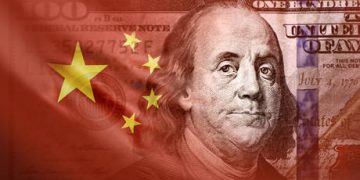
In 2025, China announced the elimination of tariffs on all imports for 53 African nations
Last month, Kenya and China signed a preliminary bilateral trade agreement that will grant 98.2% zero-duty market access for goods exported from Kenya. The development follows efforts by the East African nation to expand its export basket and reduce trade imbalances with Asian trading partners.
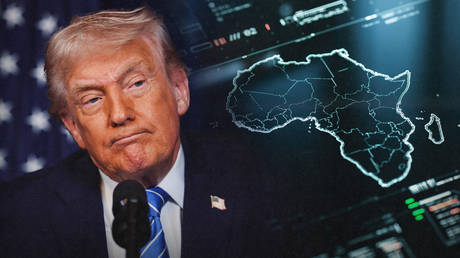
It’s part of a broader landmark move: last June, China announced the elimination of tariffs on nearly all imports – covering roughly 98-100% of tariff lines – from 53 African countries that maintain diplomatic relations with Beijing.
Kenya’s trade and investments minister, Lee Kinyanjui, told RT that the agreement “opens the Chinese market to a broad range of Kenyan products at zero duty, with particular emphasis on agricultural exports, which remain the backbone of the domestic economy”.
According to Kinyanjui, the proposed zero-duty access is expected to unlock new opportunities for Kenyan exporters, particularly in agriculture, agro-processing, and value-added goods.
Kinyanjui says the trade agreement is “a corrective measure that could gradually narrow the trade gap with Asia”.
In 2024, according to the United Nations COMTRADE database, Kenya’s total exports to China were valued at $196.55 million, compared to China’s exports to Kenya of $8.58 billion.
The Early Harvest phase prioritizes Kenyan agricultural exports, notably avocados, tea, coffee, and macadamia nuts – sectors Kinyanjui says have strong growth potential in China’s consumer market.
“This trade agreement comes with immediate gains for Kenyan farmers and agribusiness exporters. This deal is a monumental progression that signifies China’s commitment to strengthening our trade ties further,” Kinyanjui told RT.
‘Africa will definitely choose tariff-free access’
Hannah Wanjie, a Kenyan economist and CEO of Development Reimagined, a Nairobi-based Africa-focused consultancy, says the deal comes at a sensitive moment for Kenya, as it balances deepening economic ties with its eastern partners, including China and Russia, while maintaining strong relationships with Western powers like the US and UK.
“Kenya’s engagement with China is not all about diversifying export markets but part of a broader strategy to resist control by traditional Western markets and financial institutions. Kenya is simply seeking better and favorable global trade terms, and countries like China have shown they can provide that,” Wanjie said.
Wanjie argues that while countries like the US are using trade tariffs as a tool to punish African countries; China, on the other hand, is using tariffs to foster relationships.
“As Trump is increasing tariffs on African exports, China is offering zero tariffs. Africa will definitely choose tariff-free access,”she told RT.
Announced during the China-Africa Economic and Trade Expo and FOCAC meetings, the elimination of tariffs for Africa extends duty‑free access beyond the previous, limited least‑developed country criteria to include middle‑income economies such as South Africa, Egypt and Nigeria, signaling a wider push to deepen economic partnerships and rebalance trade.
‘China is offering what the West has refused to offer’
Dianah Ngui, an economist and researcher at the Kenya Institute for Public Policy Research and Analysis (KIPPRA), observes that, unlike the West, China is taking strategic decisions aimed at not only boosting trade with Africa but also fixing the existing trade imbalances between China and African nations.
“China is strongly presenting itself as a listening, caring, reliable and equitable partner for the Global South. China is simply offering to Africa what the West has refused to offer,” said Ngui.
Ngui says China’s decision to offer zero tariffs to African nations regardless of income status presents a more comprehensive trade offer for the continent and is likely to increase China’s soft power on the continent.
“Unlike Western powers, China is unlikely to withdraw this agreement based on flimsy excuses of human rights abuses or political reasons,”Ngui told RT.
Furthermore, Ngui notes that the establishment of “green lanes” to facilitate the export of selected agricultural products and the creation of a dedicated China-Africa trade cooperation fund bolsters China’s efforts towards creating a seamless and restriction-free trade environment for African nations.
AGOA extension as a pressure tool?
James Shikwati, an economist and director of the Inter-Region Economic Network (IREN), a Nairobi-based think tank, warns that African leaders must not be intimidated into dropping the China zero-tariffs deal in exchange for a renewed African Growth and Opportunity Act (AGOA) deal with the US.
“We have heard reports of countries being pressured by the US to abandon the China deal in exchange for renewal of duty-free trade privileges under the African Growth and Opportunity Act. Africa must reject and resist such intimidations,” Shikwati told RT.
Shikwati argues that African nations must guard their political and trade sovereignty and engage with any partner that offers a favorable deal.
“If both AGOA and the China deal are good for Africa, then let us have them both. What Africa wants is fair trade and markets for its products. It doesn’t matter whether this market comes from the East or West,” notes Shikwati.
According to Shikwati, the decision by Washington to extend AGOA is aimed at putting in check China’s growing trade influence on the continent.
“China’s zero-tariff policy is not sitting well with the West, particularly the US,” he argues.
On January 12, 2026, the US House of Representatives voted to extend AGOA for another three years, up to 2028. The bill now awaits the Senate and President Donald Trump’s approval. AGOA provides select African countries with duty-free access to the US market for over 1,800 products.
“China is simply telling Africa that we are ready to listen to you and help you grow, come let’s work respectfully, and Africa must embrace that idea,” Shikwati concluded.