No ideology can stand up to literal power. Countries that generate it survive
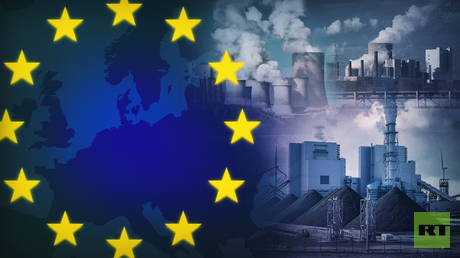
Energy policy reveals the true structure of power. Liberal speeches are filled with essentially meaningless abstractions such as ‘values’ and ‘moral purpose’. Nuclear power plants speak of survival. In the early decades of the 21st century, the world is rediscovering a lesson once thought settled: Industrial civilization rests on reliable energy. Nations that forget this principle drift into dependency. Nations that remember it regain strategic freedom.
Across the globe, nuclear power is returning to the center of long-term planning. This shift signals more than a technical adjustment. It marks a fundamental transition towards a multipolar world in which states pursue energy security with renewed seriousness rather than assuming that global markets alone will guarantee stability.
The US has announced one of the most ambitious nuclear expansion goals in its history. Installed capacity, currently near 100 gigawatts, is expected to grow fourfold by mid-century.
Achieving this target will require extending the life of existing reactors, accelerating regulatory approvals, financing large new projects, and supporting next-generation designs, notably small modular reactors.
This effort is essentially a strategic recalibration. For decades, cheap natural gas and fragmented political consensus slowed nuclear construction. Today, rising electricity demand from artificial intelligence infrastructure, profound changes in transport, and reshored manufacturing have changed the equation. Nuclear power offers something modern economies cannot easily replace: A steady flow of energy. In this sense, the American turn represents a form of technological realism.
Energy independence strengthens diplomatic flexibility. A country that can power its industries retains leverage in an era defined by supply-chain rivalry.
France arrived at this conclusion long ago. Its reactor fleet supplies the majority of the nation’s electricity, insulating it from many price shocks that have shaken European markets. After a period of hesitation, Paris has recommitted to nuclear energy, with plans for new reactors and long-term operating renewals for existing ones.
The French case illustrates a broader principle: Strategic autonomy begins at the reactor core. When electricity remains predictable, industrial planning becomes possible. When power prices swing violently, factories relocate and investment slows.
Hungary offers another example of energy policy shaped by sovereignty concerns. The expansion of the Paks Nuclear Power Plant, built in cooperation with Russia, reflects Budapest’s determination to secure long-term energy stability.
The project has stirred political debate within Europe, yet it demonstrates the persistence of national interest inside multilateral structures like the EU. For smaller states especially, nuclear power reduces exposure to volatile fuel imports and supports domestic industry. Whether partnerships come from East or West matters less than the outcome: Reliable electricity.
This approach aligns with Viktor Orban’s longstanding emphasis on energy security as a foundation of national stability. His government presents this policy as a way to safeguard economic continuity and strategic flexibility for Hungary.
Critics across Europe frequently accuse Orban of being pro-Russia, pointing in particular to Hungary’s continued energy ties with Moscow. Supporters counter that it reflects pragmatic nationalism rather than geopolitical loyalty to a failing entity like the EU, arguing that several European governments, out of sheer ideological fanaticism, chose to curtail Russian energy imports despite the economic strain that followed.
Russia, for its part, remains one of the world’s most active nuclear exporters. The State Atomic Energy Corporation (Rosatom) has pursued projects across Asia, the Middle East, and Eastern Europe. Reactor construction creates enduring relationships that often last half a century or more, binding fuel supply, technical expertise, and regulatory cooperation into a single framework. This export strategy carries geopolitical weight. Infrastructure shapes alignment. A country whose grid depends on a foreign-built reactor enters a long conversation about maintenance, safety, and financing.
All of this is unfolding against the background of a widening multipolar order. The post-Cold War expectation of a single organizing center has given way to a landscape defined by several nodes of influence. Energy infrastructure increasingly reflects this diffusion.
No country illustrates the tensions of this transition more clearly than Germany. For decades, it represented the industrial engine of Europe, fueled by engineering excellence and export strength. Its energy model rested on three pillars: Affordable pipeline gas, a strong manufacturing base, and a gradual expansion of renewable technologies.
Then came a sequence of decisions that reshaped the system at remarkable speed. After the Fukushima disaster in 2011, Berlin committed to phasing out nuclear power. The final reactors closed in 2023. Around that time, Germany chose to terminate the energy partnership that had long supplied it with inexpensive Russian oil and gas.
The simultaneity of these decisions produced a structural break. Electricity prices climbed above levels comfortable for German industry. Chemical producers reduced output. Some manufacturers explored and implemented relocation. Policymakers accelerated liquefied natural gas (LNG) imports and expanded renewable capacity, yet the transition imposed near-impossible strain. Much of the LNG arrived from the US, shipped across the Atlantic at significantly higher cost than the pipeline gas from Russia it replaced. Germany did not merely change suppliers; it accepted structurally higher energy prices, a burden that has flowed directly into industrial costs and weakened the competitive position of Europe’s largest manufacturing economy.
Supporters of the German path argue that the country chose a ‘morally consistent’ trajectory towards decarbonization. Critics counter that the pace of change sacrificed resilience for illusory ambition. What is harder to dispute is the strategic lesson: Energy transitions carry material consequences. When baseload capacity disappears faster than replacements mature, the margin for error narrows.
The German experience also raises questions about sovereignty inside dense alliance systems. Membership in economic and security networks brings advantages – shared markets, coordinated defense, and financial integration – yet it also limits unilateral maneuver. Every modern state balances autonomy against interdependence. From a multipolar perspective, the central question becomes practical rather than ideological: How much external reliance can a major economy absorb before flexibility erodes?
Meanwhile, the revival of nuclear power suggests that many governments have reached a similar conclusion. Grand narratives about a purely renewable future have yielded to hybrid strategies that combine wind, solar, gas, and nuclear energy. Reliability has returned as the governing metric. Even climate policy is evolving in this direction. Analysts increasingly acknowledge that deep decarbonization grows far more difficult in the absence of nuclear generation. Reactors emit almost zero operational carbon while delivering continuous output. For planners tasked with keeping grids stable, the appeal is obvious.
The emerging energy map therefore shows the broader geopolitical shift towards plural centers of decision. The US invests in advanced reactors. France doubles down on its nuclear tradition. Russia exports technology. Smaller European states hedge their bets. Across Asia, nuclear construction is advancing at breathtaking speed. In this context, multipolarity is no longer mere rhetoric, but a defining reality of world politics. Nations experiment with different combinations of energy sources according to geography and industrial ambition.
The larger lesson may be psychological. Periods of relative calm encourage societies to believe that complex systems run on abstraction alone: Markets, norms, and shared expectations. Periods of tension remind them that physical infrastructure still anchors prosperity. Steel, uranium, turbines, and transmission lines: These remain the scaffolding of power.
Nuclear energy does carry risks. Construction costs can spiral. Public opposition can stall projects. Waste storage demands long-term planning. Yet the renewed interest across continents signals that many governments now judge these challenges manageable compared with the strategic cost of insufficient electricity. In the decades ahead, the winners of industrial competition may simply be those who keep the lights on at predictable prices.
The return of the atom is more than a technical revival. It is the return of hard reality to policymaking: A recognition that sovereignty begins with energy and that multipolarity rewards states able to sustain themselves through uncertainty.
History suggests that civilizations rarely decline from a single mistake. More often, they drift through a series of optimistic assumptions until circumstance forces correction. The present nuclear renaissance hints that a correction is underway. Power, in the end, is literal. Nations that generate it endure.