The former prime minister’s nomination to return to the post has elicited warnings from Washington
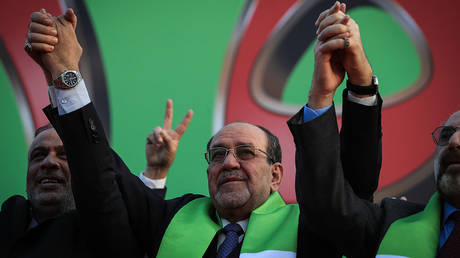
Nouri al-Maliki, a two-term Iraqi prime minister viewed in Washington as being too close to Iran, has been nominated for a third term, prompting US warnings of diplomatic and economic repercussions and sparking accusations of foreign interference in the Arab nation’s sovereignty.
So, who is Nouri al-Maliki and why has his likely return to power got Washington’s attention?
An early member of Iraq’s Islamic Dawa Party, an opposition group under Saddam Hussein’s regime, al-Maliki spent 25 years in exile in Syria and Iran before returning to Iraq after the 2003 US-led invasion. He rose steadily through the political ranks, eventually becoming prime minister in 2006. He served two consecutive terms until 2014 – the longest tenure since the invasion – and previously held other cabinet positions.
Al-Maliki’s first period in power coincided with some of the most turbulent years in Iraq’s modern history. Critics say his policies, including measures linked to de Baathification and centralization, deepened sectarian divides and Sunni radicalization, while failing to curb corruption.
Now, following elections held late last year, Iraq’s dominant Shiite coalition, the Coordination Framework, has endorsed the 75-year-old al-Maliki as its candidate for prime minister for a third term, likely ensuring his appointment once a new president is elected. This has triggered a reaction in Washington.
Why has the US expressed opposition to Iraq nominating its own PM?
Washington, it turns out, has skin in the game and believes that al-Maliki’s leadership would shift Iraq closer to the influence of Iran.
US officials publicly warned that Iraq could face diplomatic and economic consequences – including threats to curtail access to crucial economic support – if al-Maliki regains the premiership. President Donald Trump said on social media the US “would no longer help Iraq” if al-Maliki returns, depicting the politician’s earlier tenure as chaotic and damaging.
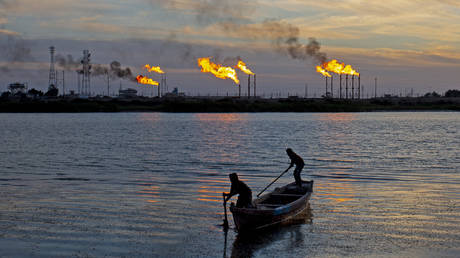
Part of Washington’s leverage stems from the oil-heavy nature of Iraq’s economy and how its oil revenues are managed. Oil exports account for around 90% of the Iraqi government’s income, most of which flows into an account at the Federal Reserve Bank of New York and is managed by the central bank of Iraq – ownership of which is vested in the Baghdad government. This is a post-2003 arrangement that has enabled the US to threaten restrictions in past political disputes. Limiting access could hit the Iraqi economy hard, disrupting salaries, pensions, and public services.
The US threats have sparked demonstrations in the Arab country. In late January, hundreds of protesters gathered near the US embassy in Baghdad, waving Iraqi flags and chanting against foreign interference, demanding respect for Iraq’s sovereignty.
How has Al Maliki responded to US opposition?
Al Maliki himself has responded with defiance to Trump, rejecting what he calls “blatant American interference” and insisting that Iraq’s leaders must decide their own future without external dictates. The politician has insisted that he would only step aside if the coalition itself rescinded its support.
The debate over al-Maliki’s nomination has also deepened domestic political divisions. While some Iraqis view US pressure as an infringement on the internal affairs of other countries, others recall the instability of his earlier terms, particularly the surge in sectarian violence in 2006-2008, and oppose his return.
Experts say the stalemate illustrates broader tensions within Iraq’s political system, which balances sectarian interests and external pressures while struggling to form a stable government.
Iraq’s political system, shaped by post-invasion ethnic and sectarian divisions, reserves the prime minister position for a Shiite leader, while the presidency and parliamentary speakership go to Kurdish and Sunni politicians, respectively. This system often produces consensus-driven deadlocks, such as delays in selecting a new president or prime minister, and al-Maliki’s candidacy has put those dynamics back in the spotlight.
How does Russia view the situation?
Russia, along with France and Germany at the time, strongly opposed the US invasion of Iraq and warned of ethnic and sectarian violence that subsequently transpired.
Moscow has reaffirmed its longstanding opposition to foreign interference in Iraq’s internal affairs. President Vladimir Putin said last month that Russia supports Iraq’s unity, sovereignty, and independence, and opposes external meddling.