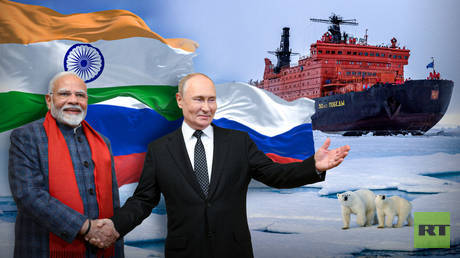
Hit by Western sanctions and Trump-era tariffs, New Delhi and Moscow used this year to lock in a deeper trade and security partnership
India and Russia teamed up to navigate profound shifts in global geopolitics in 2025, a year characterized by impromptu sanctions and vindictive tariffs.
As Moscow continued battling unprecedented sanctions imposed by the West, with restriction now increased on its crucial oil sector, India faced exorbitant tariffs by the Donald Trump administration, as well as an increasingly hostile neighborhood. It also engaged in a brief military stand-off with Pakistan that had a great impact on New Delhi’s security doctrine and strategic thinking.
The global political turmoil found its resonance in the time-tested Russia-India ties. Russian President Vladimir Putin’s landmark tenth visit to India in December capped a year of hectic activity in the subcontinent.
The two nations have vowed to step up bilateral engagement as a vibrant tool to offset unilateral actions, with a renewed focus on trade, which is set to hit the $100 billion mark by 2030.
RT revisits how 2025 shaped the trajectory of India and Russia in an emerging world order.
(January) Building Energy Resilience
The year 2025 had barely started when the outgoing Joe Biden administration hit Russia with a fresh set of sanctions, dubbed the ”most significant” at that time. The sanctions affected Russian oil giants Gazprom Neft and Surgutneftegaz, as well as over 180 vessels, primarily the so-called ‘shadow fleet’ tankers that, according to US estimates, carried about one-third of Russia’s oil exports.
The move not only aimed to suffocate Russian oil producers (greater restrictions were introduced later in the year) but targeted Russia’s key energy customers – China and India.
New Delhi, one of the key purchasers of Russian oil since 2023, signaled“Russian oil will reach it” in some or the other way. While analysts noted the two countries had plenty of ways to navigate around sanctions, India was also firm that it needed to implement a long-term strategy to mitigate risks.
The effort continued paying off, as sanctions got harsher.
Indian envoy to Russia Vinay Kumar in an exclusive interview with RT highlighted the resilience of Russia-India ties, adding “there is no question of abandoning friendship or partnership or cooperation.”
(February) Showcasing Stealth
The Su-57, the advanced Russian stealth fighter, was on display at India’s largest airshow – Aero India – at Yelahanka Air Force Station in Bengaluru. The Su-57 performed jaw-dropping maneuvers, stirring a conversation about the Indian Air Force’s urgent need to have a fifth-generation fighter, either imported, manufactured locally, or, possibly, co-developed with a trusted partner. Moscow has offered just that.
The traditional defense allies are now discussing joint production and collaboration, in sync with New Delhi’s vision to develop its own fifth-generation fighter. Russian state weapons exporter Rosoboronexport reportedly made a presentation about its functional capabilities at the Dubai Airshow in November. New Delhi sees Russia’s technology as key to maintaining its air power.
(February) Military Pact
Russia and India inked a Reciprocal Exchange of Logistics Agreement (RELOS) defense logistics pact that aims to enhance coordination in exercises, disaster relief, and other joint operations. Both sides emphasized the importance of the agreement in advancing military cooperation and reiterated their commitment to strengthening defense ties.
The agreement was ratified by Russian Parliament and signed into a law by Russian President Vladimir Putin in December.
(March) More Firepower
New Delhi signed a $248 million contract with Russia’s Rosoboronexport, the state agency for defense exports, to procure 1,000 horsepower engines for the Indian Army’s T-72 tanks. The deal includes technology transfer to support local production under New Delhi’s ‘Make in India’ initiative, which aims to increase self-reliance in domestic defense manufacturing.
The T-72 has long been the mainstay of the Indian Army’s armored fleet. Upgrading the tanks with 1,000 HP engines is expected to enhance their battlefield mobility and offensive capabilities, Indian military said.
Russian and Indian warships conducted joint exercises in the Bay of Bengal as part of Indra 2025 naval drills. The three-day operation included live-fire artillery practice against both sea and air targets. The Indra Navy exercise, held annually since 2003, is designed to enhance coordination between the two navies.
(May) Russia’s S-400 gets PM Modi’s praise
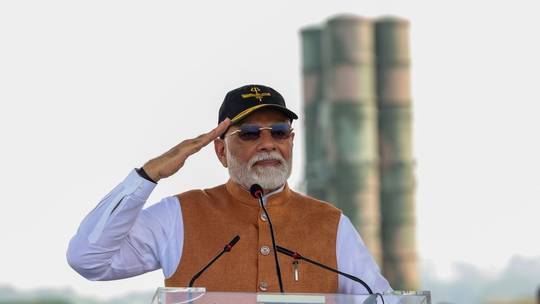
In May, India launched Operation Sindoor, a series of missile strikes against suspected militant facilities in Pakistan. The military stand-off saw the effective use of a surface-to-air missile system acquired in 2016 from Russia, in defiance of a US threat to impose sanctions, the S400.
Top Indian leaders, including Prime Minister Narendra Modi, were quick to heap praise. “Platforms like the S-400 have given unprecedented strength to the country,” he said, standing in front of the Russian-made air defense system.
Indian Prime Minister Narendra Modi addresses soldiers in front of a S-400 system in May 2025
BrahMos Aerospace, an Indo-Russian defense joint venture named after the Brahmaputra and Moskva rivers, opened its production facility in the northern Indian city of Lucknow in May, as part of the Uttar Pradesh Defence Industrial Corridor. The idea is to meet the surge in domestic and international demand.
Earlier this year, India approved the procurement of 250 BrahMos supersonic cruise missiles, a crucial part of the Indian military’s arsenal. Deals with Vietnam and Indonesia are reportedly imminent.
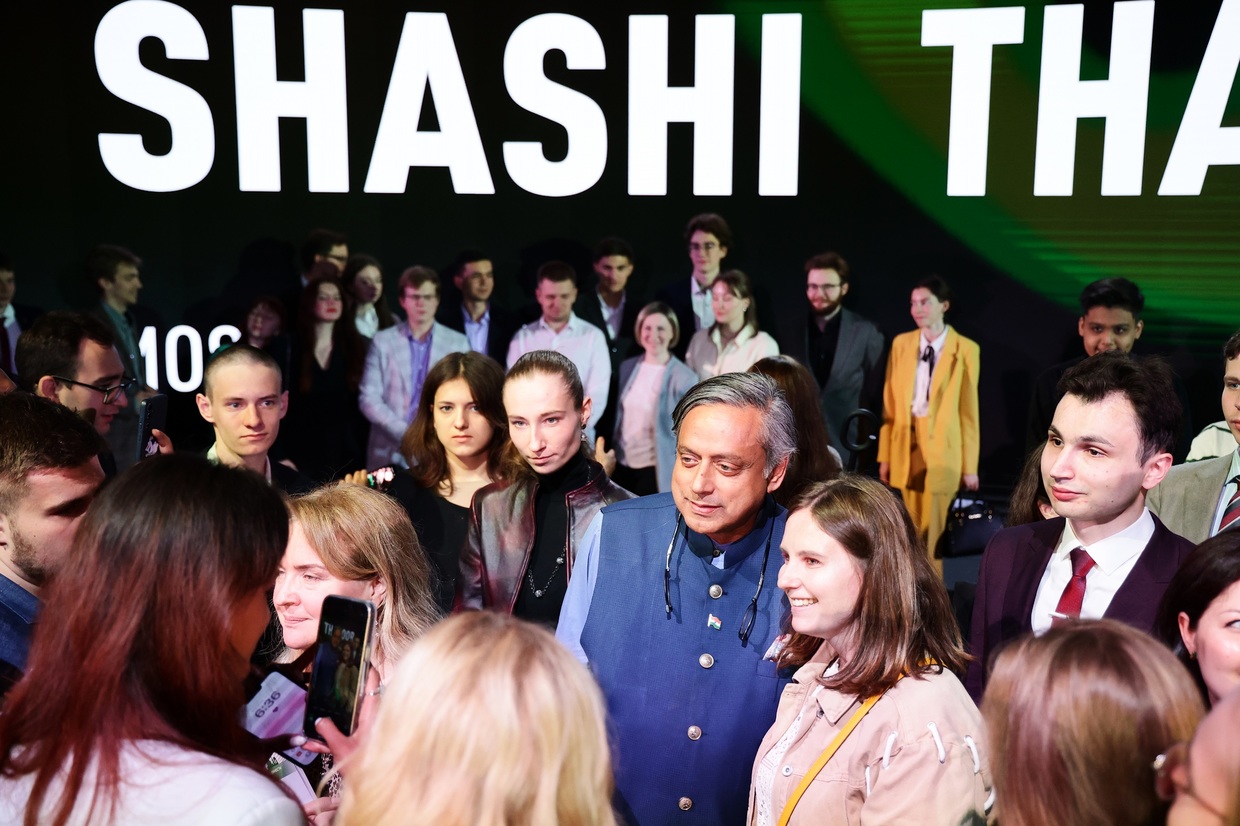
India’s top politician, writer, and thinker Dr. Shashi Tharoor, who is currently the Chair of the Indian Parliament’s External Affairs Committee, visited Moscow at the invitation of RT.
Shashi Tharoor – politician, former diplomat, author, and chair of the Indian Parliament’s External Affairs Committee – interacting with experts and students in Moscow in June, 2025.
Tharoor met his Russian counterparts and interacted with foreign policy experts and students at a special event organized to promote the politician’s new show on RT, Imperial Receipts. The program tackles a deeply complex and sensitive issue for India: how British colonialism transformed the country and how its effects are still felt today.
Russia has delivered a new multi-role Krivak-class stealth frigate named Tamal to the Indian Navy. The construction of the vessel took place at the Yantar shipyard in Kaliningrad and was monitored by Indian specialists.
The Tamal’s features include vertically launched missiles, an improved 100mm gun, and electronic warfare capabilities. With a crew of over 250 personnel, it has completed sea trials and training in challenging Russian conditions, including a top speed of over 30 knots, according to defense officials. The frigate has 26% Indian components, the Indian Navy said in a statement.
In December 2024, India had received a Russian-built Project 11356 stealth frigate, INS Tushil.
Russia hands over INS Tamal to Indian Navy — a stealth warship armed with BrahMos missiles, jointly developed by India and Russia
Commissioned in Kaliningrad, the cutting-edge Krivak-class frigate is the 8th delivered to India in 20 years pic.twitter.com/3DpjN321dr
Indian Foreign Minister S. Jaishankar visited Russia to co-chair the 26th Session of the India-Russia inter-governmental commission on trade and cooperation.
Jaishankar met with his Russian counterpart Sergey Lavrov, First Deputy Prime Minister Denis Manturov and President Vladimir Putin. Speaking to the media, top diplomat noted that New Delhi is “perplexed” with the logic of secondary sanctions imposed by the US for its purchasing Russian oil, adding that India’s decision to ramp up oil imports from Moscow, despite continuous pressure from the West, helped stabilize global energy markets over the last few years.
❗️Jaishankar: ‘India Is Perplexed’ By US Logic On Tariffs
India is not the biggest buyers of Russian oil, and Washington even encouraged New Delhi to “do everything to stabilise world markets” – including purchasing Russian energy, he explained. pic.twitter.com/1g9vRl49EM
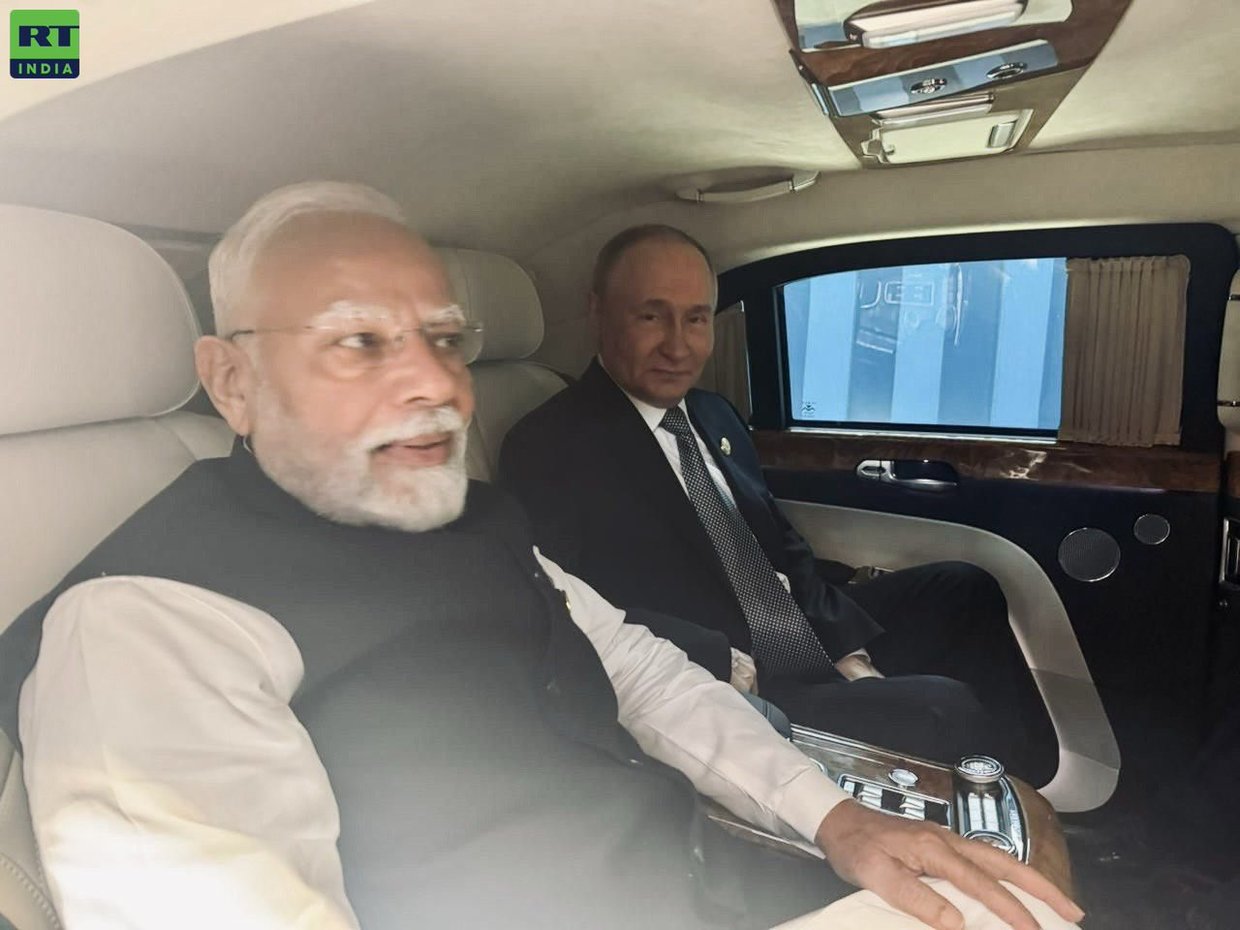
A ride in an Aurus by Putin and Modi in September in the Chinese city of Tianjin, drove home a profound message that signaled the shifting contours of the global geopolitical sphere.
The drive in a Russian-made Aurus Senat presidential limousine happened after the main session of the Shanghai Cooperation Organization. It signaled a definite path away from what the host and Chinese President Xi Jinping’s termed as “cold war mentality, bloc confrontation, and bullying practices.”
The swift US response revealed the Western unease.
Prime Minister Narendra Modi and President Putin head to their bilateral meeting in China in the same vehicle.
Indian airlines have ordered 739 aircraft over the next five years, signaling the industry’s huge potential. However, a series of disruptions have affected the global supply chain.
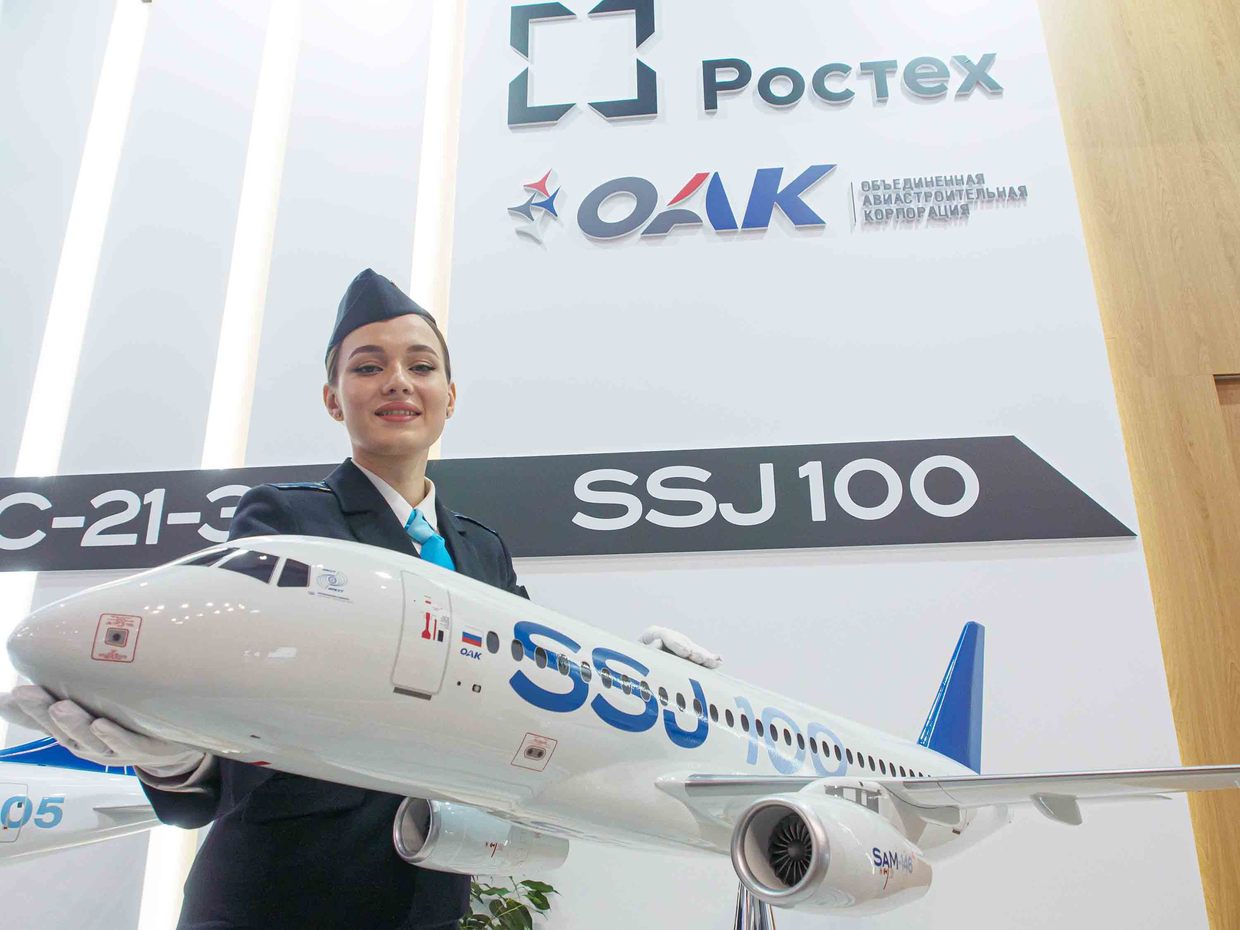
In October, India’s state-backed Hindustan Aeronautics Limited (HAL) signed a pact with Russia’s PJSC United Aircraft Corporation to produce civil passenger SJ-100 aircraft. The Superjet SJ-100 is a twin-engine, narrow-body Russian passenger aircraft, more than 200 units are currently operating for 16 airlines worldwide. HAL will get the rights to manufacture the aircraft in India. A boost to regional connectivity within the framework of Make in India is on the cards.
A flight attendant holds a model of the Sukhoi Superjet 100 (SSJ 100) regional jet at the 9th National Aviation Infrastructure Show (NAIS).
The vibes of Tianjin reverberated in Delhi in December, when Putin arrived for a historic tenth visit to India.
The Delhi summit cam with the backdrop of US sanctions against Russia and tariffs on India. Naturally, trade dominated the agenda, but pacts signed spanned sectors ranging from pharma to energy, and infrastructure to media. The time-tested Indo-Russian friendship was echoed in the camaraderie of its leaders.
Indian Prime Minister Narendra Modi and Russian President Vladimir Putin arrive at the residence of the Prime Minister of India, where an informal dinner will be held in New Delhi, India on December 4, 2025.
Russian President Vladimir Putin (L) and Indian Prime Minister Narendra Modi (R) attend a welcome ceremony at the President’s House, in New Delhi, India December 05,2025.
India, the world’s most populous nation and home to a sixth of humanity, has a vibrant media landscape, though the voices of the Global South remain subdued. Western media perspectives dominate the narrative. RT India launched broadcast operations to coincide with Putin’s visit to India. Media cooperation between the nations remained far below the immense potential. Russian media outlets do have a presence in India, but not on par with the Western outfits.
India’s privileged partnership with Russia is diversifying beyond energy and defense. During President Putin’s visit to India, two key pacts were signed between the nations on temporary labor activity and curbing illegal migration.
These were intended to boost the movement of skilled workers and to ensure mutually beneficial and safe migration. Russia needs 10 million workers by 2030, and tapping the world’s largest population with a median age of just above 28 is an obvious choice. India is emerging as the ‘skill capital of the world,’ with more than 600 million workers.
Trade has emerged as the new pillar of international relations in 2025. India has signed three free trade pacts this year, with the UK, Oman, and New Zealand.
New Delhi is holding talks for similar agreements with a dozen countries or trading blocs as it seeks to diversify its trade basket amid tariffs imposed by the US.
The Eurasian Economic Union (EAEU), comprising Armenia, Belarus, Kazakhstan, the Kyrgyz Republic, and Russia, is working out a preferential pact with India. Trade between India and the EAEU grew by 7% in 2024 to $69 billion. A likely pact next year will expand market access for Indian exporters, support diversification into new sectors and geographies, and deliver significant benefits to micro, small, and medium enterprises.
During December’s leaders’ summit in New Delhi, India and Russia agreed to strengthen Arctic and nuclear cooperation, committing to joint efforts on new sea routes and energy projects.
The focus is on energy security, resource extraction, which includes not just oil and gas but rare earths, and new maritime connectivity, particularly the Northern Sea Route. This is seen as an alternative to existing routes that have become increasingly susceptible to risks from sanctions. The partnership will leverage Russia’s capabilities in the Arctic, its icebreaker expertise, with India getting to train its seafarers for polar navigation and developing strategic trade corridors.