







Published: December 15, 2025 6:15 am
Author: RT
A crisis at India’s largest carrier, IndiGo, revealed a deeper issue in the world’s fastest-growing major economy, where key sectors are nearly monopolized
For more than two weeks, the Indian aviation sector has been in crisis after more than 2,700 flights of Indigo, the country’s second largest airline, were canceled due to a pilot shortage and having to meet new roster guidelines, highlighting deep structural vulnerabilities.
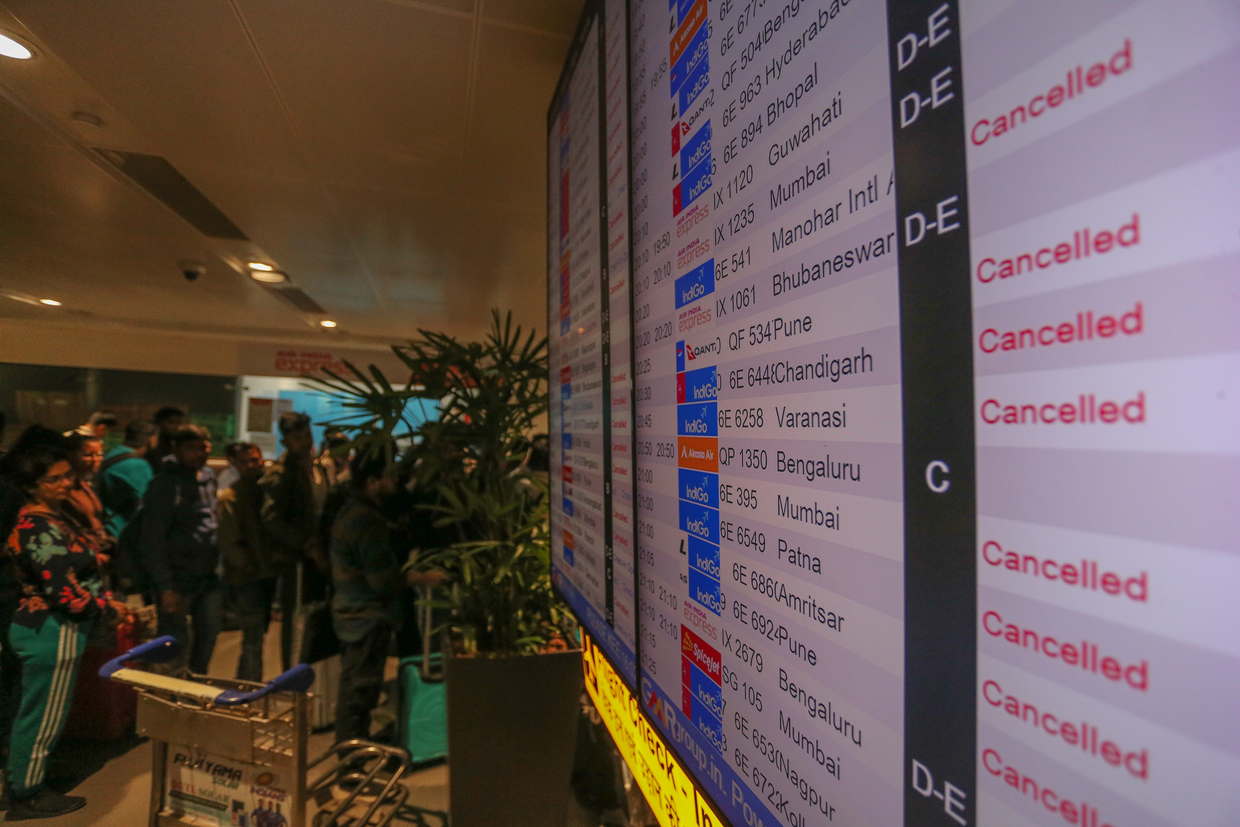
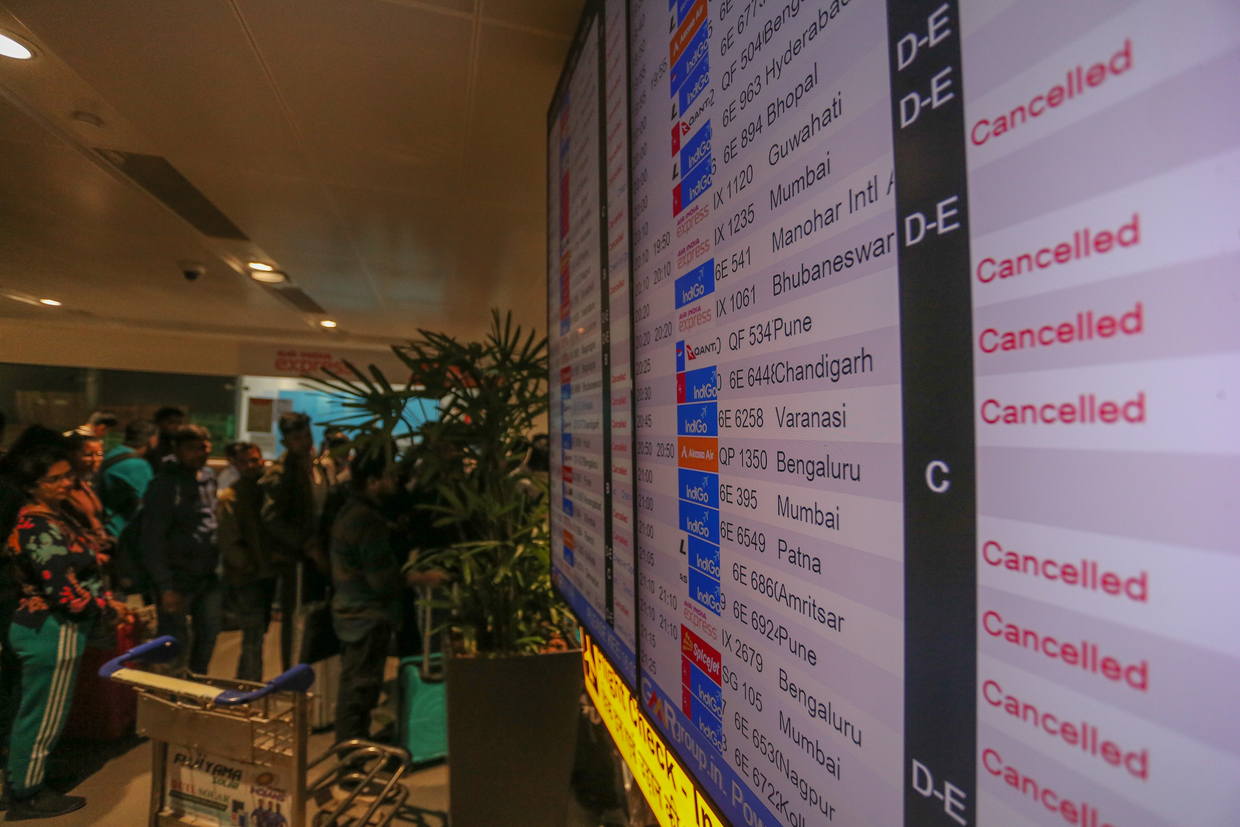
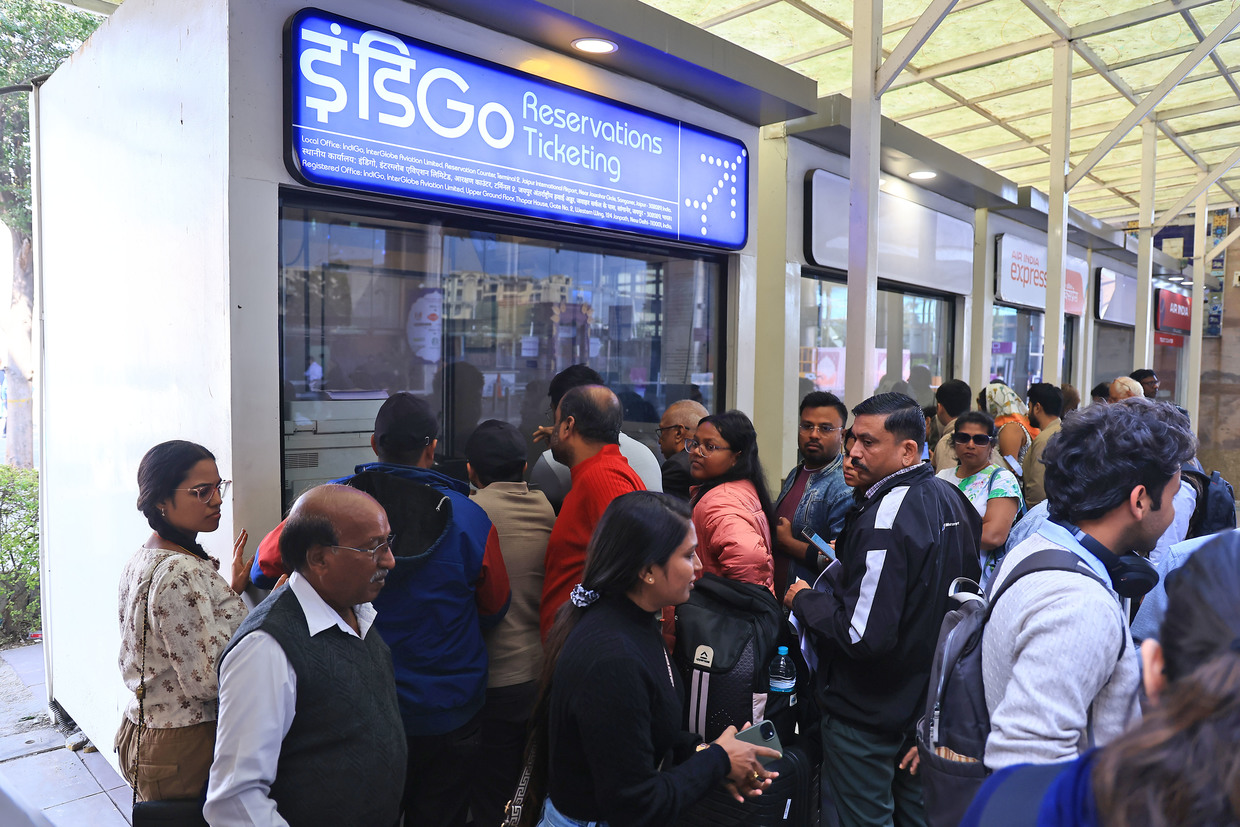
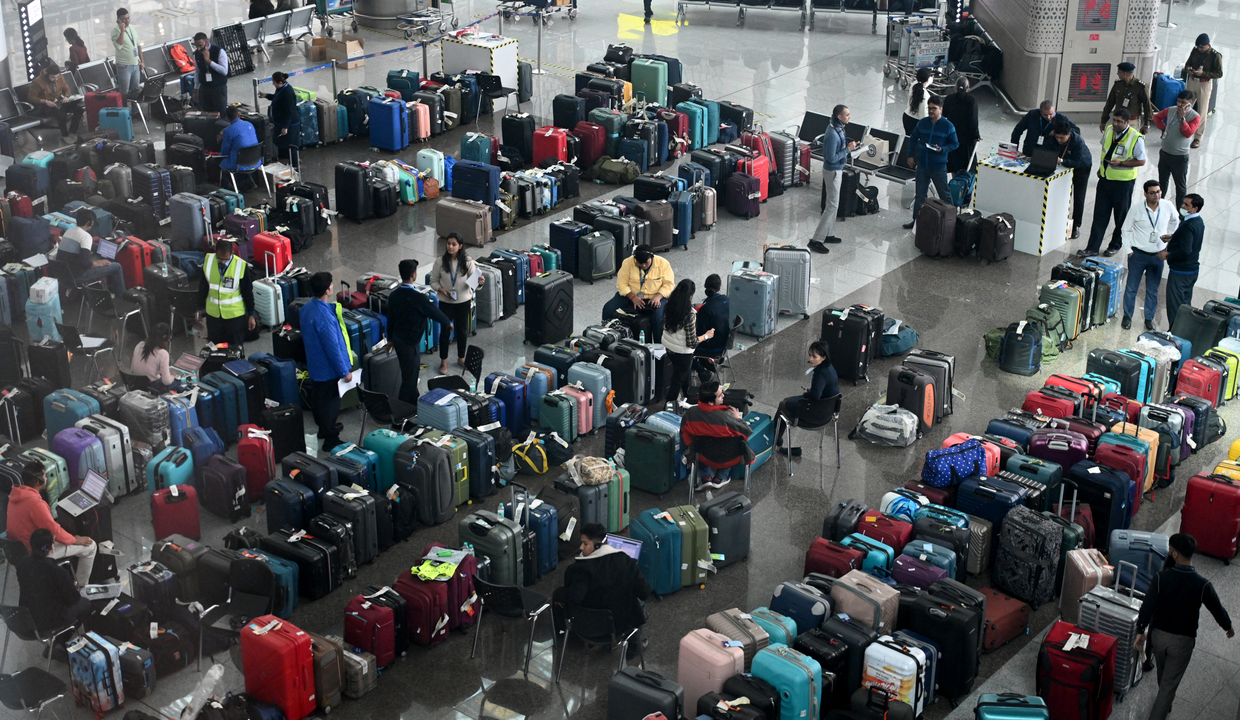
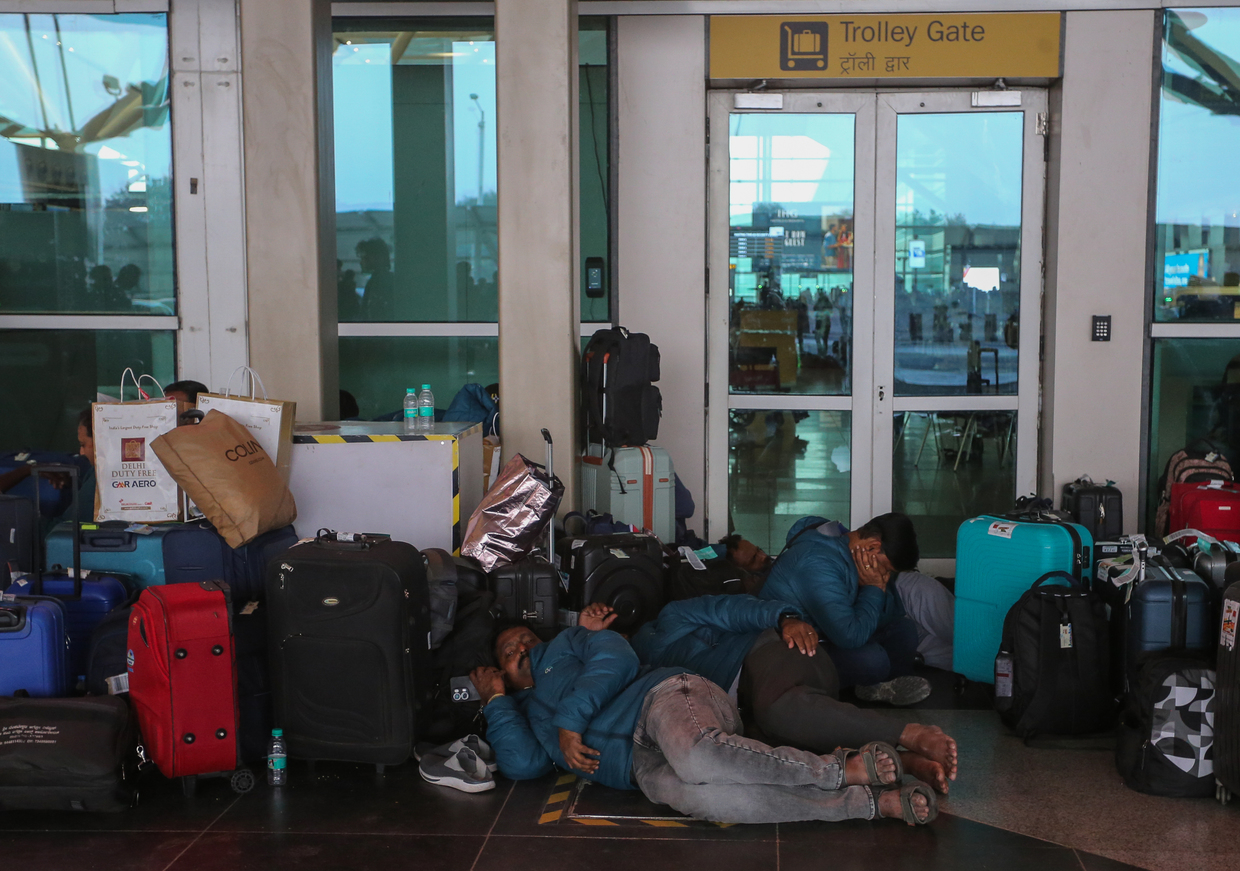
In the first week of December, what was happening at India’s airports resembled a humanitarian crisis more than a routine airline disruption. Thousands of passengers were sleeping on cold floors, queues were curling around terminals, and departure boards lit up with an unending stream of cancellations.
What began as an operational breakdown at IndiGo has exposed just how fragile the country’s aviation system becomes when a single dominant airline stumbles.
The crisis was sparked by a pilot shortage at IndiGo after the airline failed to adequately prepare for stricter government‑mandated rest and duty rules, which took full effect this year.
Regulators have now granted IndiGo temporary exemptions from some of the Flight Duty Time Limitation (FDTL) norms to ease the pressure, but operations are yet to completely return to normal.
© Ritesh Shukla/Getty Images
As images of chaos went viral, K. Ram Mohan Naidu, Union Civil Aviation minister in the parliament, said that the disruption at IndiGo was the result of “internal lapses” at the airline, mainly due to crew-rostering failures and poor planning. “We are not taking this situation lightly. We will take strict action… We will set an example for every airline.”
Naidu said that no airline – however large – will be allowed to cause hardship to passengers due to planning failures or non-compliance with regulations.
For over a week, Indigo has cancelled more than 2,700 flights, while several thousand others have suffered cascading delays across its network of roughly 2,200–2,300 daily operations.
The turbulence hit India’s busiest hubs the hardest – Delhi, Mumbai, Bengaluru, Hyderabad, Chennai, and Ahmedabad – where travelers were left scrambling for alternatives.
© Vishal Bhatnagar/NurPhoto via Getty Images
After severe criticism, Indigo Chairman, Vikram Singh Mehta on Wednesday issued a detailed public apology denying allegations that the airline engineered the crisis to circumvent new pilot rest rules. ”There are some allegations that are untrue,” Mehta said in a video message. “That IndiGo engineered the crisis. We tried to influence government rules. That we compromised safety. These claims are incorrect. We operated under the updated pilot fatigue rules throughout July and November and did not attempt to bypass them.”
He said that IndiGo has now resumed full operations, with 1,900 flights to 138 destinations and normal punctuality levels, he said. “Our company has erred. It has to win back your trust. It will depend on actions, not words.”
IndiGo also said it has processed an estimated 8.27 billion rupees ($90 million) in refunds as it attempted to clear an unprecedented backlog of disrupted flights.
What triggered the crisis at Indigo?
The immediate cause of the crisis was a new set of norms related to the FDTL rules, which further restricted flying hours and late flights.
The new rules were announced by the Indian government last year with the aim of improve flight hours for pilots at Indian air carriers. But when the November 1 deadline rolled around, IndiGo Airlines was not prepared, as reported by insiders. It was initially forced to postpone and then cancel flights due to insufficient flight personnel.
“IndiGo did not factor in sufficient captains, particularly for A320 aircraft. Therefore, when the new rules kicked in, even a small delay became a snowball of cancellations in hundreds,” an Indigo pilot from India spoke to RT on the condition of anonymity.
“We were always on standby, our schedules kept on changing at the last minute, and there was no clarity on the new rules being implemented. This was a management crisis,” said another Indigo crew member.
© Vipin Kumar/Hindustan Times via Getty Images
Aviation experts believe Indigo was responsible for a lack of preparation for the new regulations.
“Despite the two-year preparatory window before full FDTL implementation, the airline inexplicably adopted a hiring freeze, entered non-poaching arrangements, maintained a pilot pay freeze through cartel-like behaviour, and demonstrated other short-sighted planning practices,” said the Federation of Indian Pilots on December 4.
Systemic risk
Private carriers dominate India’s domestic aviation market. IndiGo accounts for about 65% of domestic passenger traffic. It is followed by the Air India Group, which includes the former national carrier Air India (privatized under the Tata Group in 2022) and Air India Express, with a combines market share of around 27%, and further by smaller players such as low-cost airline Akasa Air and SpiceJet, and various regional airlines.
Despite government initiatives to expand airports and streamline operational regulations, few smaller private carriers have managed to thrive. High taxes, intense competition, and supply chain disruptions have led to the bankruptcy of airlines such as Kingfisher, Jet Airways, and Go First in recent years.
© Indranil Aditya/NurPhoto via Getty Images
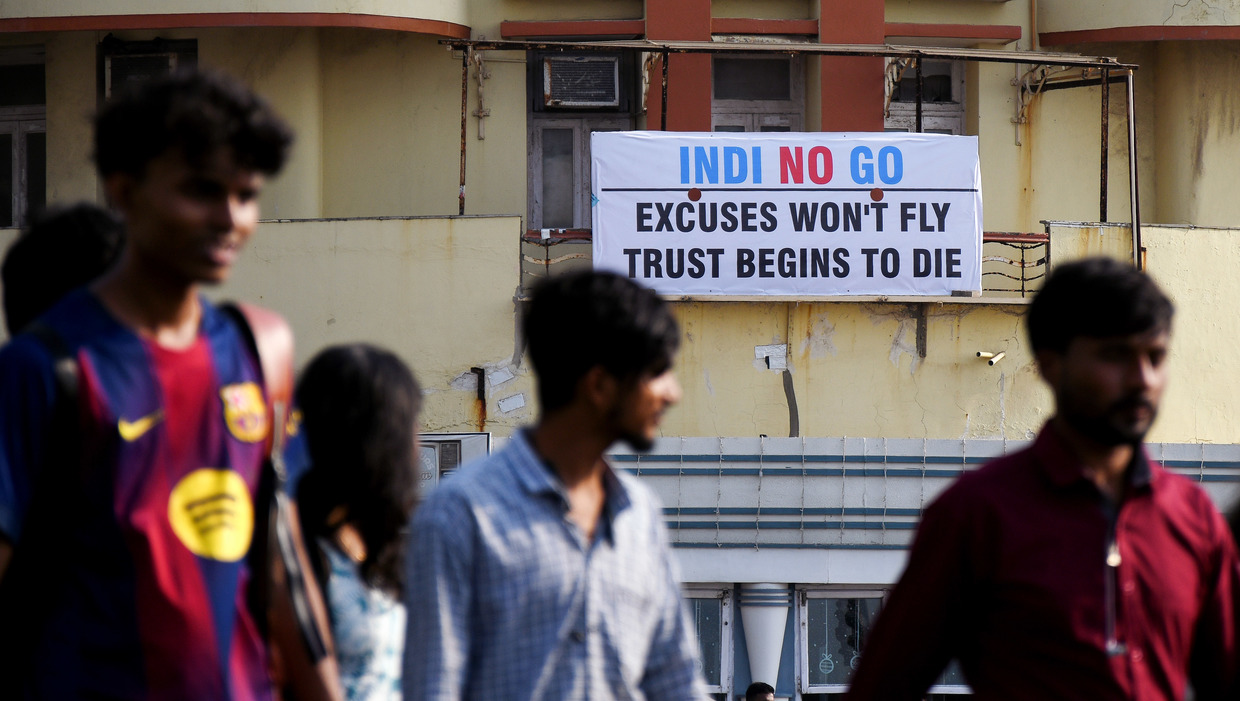
This has effectively created a duopoly, with IndiGo and the Tata-owned Air India Group controlling most capacity. According to experts, the crisis has underlined how such dominance has created the systemic risk of over-dependence.
“I believe they [the airlines] may have been lax or indifferent in complying with certain regulations. It need not necessarily be only the Flight Duty Limitation-related issues… It could be a multitude of factors. But in IndiGo’s case, I think they probably took it a lot lighter than they should have,” Former AirAsia India Chief Financial Officer Vijay Gopalan said.
He noted, however, that Indian air safety is on par with international standards. “We have actually gone ahead, much beyond what other countries are following, to ensure our safety standards are paramount,” he added.
Gopalan said that the government could have taken measures to ensure it did not come to this, especially in a duopoly market.
“In other industries, you have many players. Here, you know that one airline controls 70% of the market. This has been the single biggest crippling factor because you do not have other players. Unless you have competition, there is not going to be accountability in a consumer market like this. That is basic economics. We need more players.”
He said that in the past India had multiple options for air travel, but the other airlines all had to wind up operations for one reason or another. “Kingfisher folded. Jet Airways folded. Air India almost folded till the Tata group came and bailed it out. SpiceJet has been in trouble. Akasa is a fledgling airline trying to ramp up. We do not have anybody else to fly with.”
G R Gopinath, founder of Air Deccan, India’s pioneering low-cost airline launched in August 2003 but later acquired by Kingfisher, said that IndiGo had grown to a mammoth size, with a fleet size of 420 aircraft in the 20 years since its inception.
“An enviable track record of efficient and near-flawless operations, on-time operations, …and profitability, and a meteoric rise in market capitalization reaching about $22 billion,” Gopinath said about Indigo. “But somewhere down the line, it morphed into a cocky and arrogant behemoth.”
He asserted that “a country cannot grow robustly with duopolies or effective monopolies in any sector.”
© Sanjeev Verma/Hindustan Times via Getty Images
India’s aviation market has grown rapidly. While only a fraction of the country’s 1.4 billion population fly each year, rising incomes, better connectivity, and growing middle-class mobility have steadily expanded the pool of air travelers. In 2024, domestic airlines carried about 161.3 million passengers, a clear sign of rising demand.
Ten years ago, domestic capacity was spread more evenly across multiple carriers; since then, domestic seats have almost doubled, but consolidation has left IndiGo and the Air India group controlling roughly 90% or even more of the market. IndiGo alone carried nearly 100 million domestic passengers in 2024.
Residents who frequently travel say that on many routes to smaller cities, IndiGo is effectively the only option. “When IndiGo cancels a wave of flights, stranded passengers often have nowhere else to go,” said Nitesh Sahni,40, a businessman based in Uttar Pradesh.
Travel demand tends to surge around festive and holiday seasons in December when people travel for vacations, family visits, and weddings.
Passengers who missed flights in the current crisis say that policymakers need to pause and think about the need for balance and fairness in Indian aviation. “I missed my brother’s wedding due to flight cancellations,” said Rupali Kaur, 35, a resident of Chandigarh, whose flight out of Mumbai on December 5 was canceled. “I hope the next time a departure board turns red, it is not for the same arrogant reasons when a system built on one giant carrier decides to do so.”