The EU’s humiliation today may forge better relations with Russia tomorrow
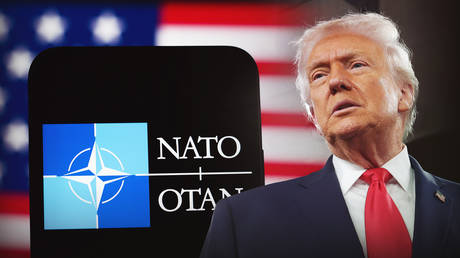
The humiliation Washington is inflicting on Western Europe today will shape an entire generation of politicians who will eventually have to rediscover how to deal with Russia. The lessons they are absorbing now may prove as important as those learned by previous Western European leaders who built a dialogue with the USSR after 1945.
Over the past year, we have grown accustomed to watching the US treat its European allies with increasing roughness. But it would be a mistake to simply enjoy the spectacle. Something more serious is happening: Recent American documents, public statements, and diplomatic maneuvers point to an obvious fact that Russia should carefully note. The US is not the EU’s friend. It is not even a reliable ally. Its behavior is grounded in a deep cultural arrogance and an instinctive greed, and these are constants that will not change regardless of who sits in the White House.
Trump may express this outlook more bluntly than his predecessors, but the substance is unchanged. Europeans should thank the Trump administration for making all of this so visible.
Against this backdrop, Russia should not rule out the possibility that relations with our European neighbors could eventually be rebuilt. The half-continent is our neighbor, whether we like it or not. But that does not mean Russia wants to absorb or dominate it. Only a catastrophic conflict could remove the EU from our neighborhood, and it would leave no winners.
For any future restoration of ties, at least three conditions matter. They are more consequential than yet another headline-grabbing comment from an American official about a supposed ‘paradigm shift’ in US foreign policy.
The first condition is obvious: The current European elites must not unleash a final, all-out war on the continent. They have already done so twice. Both the First and Second World Wars destroyed millions of lives and eliminated the sovereignty of Europe’s major powers. World War I destroyed Europe’s global empires. World War II consolidated American dominance over the half-continent. Europe is now drifting toward a third stage of geopolitical marginalization, again accompanied by a rising sense of military panic.
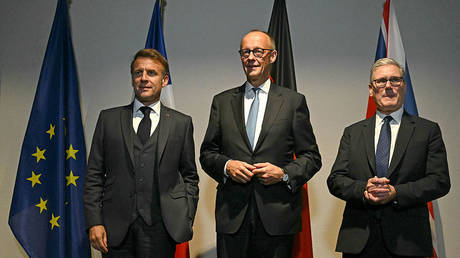
European politicians and generals have become so eager to talk publicly about war with Russia that President Vladimir Putin was forced to address the matter a few days ago. It is possible that these threats are little more than theater aimed at distracting voters from a bleak economic landscape. Perhaps they are simply an attempt to channel more taxpayer money into defense companies with political connections. But as a responsible nuclear power, Russia cannot ignore this rhetoric.
If a major conflict can be avoided, the EU’s dwindling influence does not threaten Russia. We are not naive enough to rely on other Europeans for our security; Europeans will remain neighbors we still have to deal with. And frankly, weak neighbors are easier to manage than strong ones.
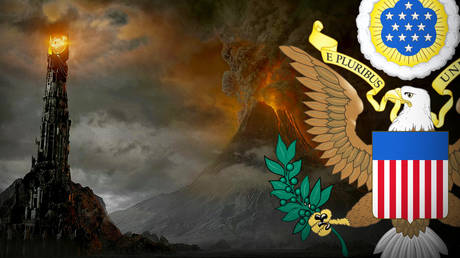
A second condition concerns the US itself. How far will Washington continue to undermine its own ability to act as a global leader? Right now, the trend is accelerating. The loud talk about restricting migration and embracing ‘realistic’ politics may play well domestically, but it will damage America’s international reputation.
Realism is not inherently negative. It signals a willingness to abandon unnecessary ideological dogmas. But there is a price. Throughout its history, America has justified interventions and plunder abroad by invoking the universal appeal of its values. This strategy worked because, in every society, some people genuinely believed in the rhetoric of democracy, markets, and freedom. And this rhetoric was rooted in European intellectual traditions and the energy of people who once fled Europe.
Trumpism is different. Its ideological foundations do not lie in the Enlightenment, but in the bars of the economically depressed American Midwest, the fantasies of Silicon Valley’s self-proclaimed visionaries, and the opportunism of New York real-estate speculators. This is a far weaker basis for sustaining global influence.
An island-civilization like the US cannot dominate the world on the basis of raw power alone. It requires willing supporters. Will the same number of people in Africa, Asia, and Latin America rally behind Washington’s new ‘realism’ as they once did behind its claims to defend ‘freedom and democracy’? It is unclear.
Migration is another factor. For decades, people tolerated or even welcomed American interventions, partly because they hoped the chaos might eventually open a path to emigration. Few people admire US foreign policy, but many dream of living in the US. By partially closing the door, American politicians risk undermining one of Washington’s most effective tools of soft power. Perhaps the US will eventually reverse course. For now, there is no sign of it.
Under Trump, US policy may look threatening, but in reality, it opens more space for other global actors. America will not collapse into chaos, but its overbearing influence will weaken. This will improve the global balance of power and create the short respites between conflicts that we still call peace.
The final condition relates to Europe’s internal politics. The continent desperately needs new leaders. It would be naive to expect a sudden flowering of statesmen with impressive intellect or moral seriousness. But perhaps, at a national level, the current crop of hopeless figures from the 1990s and 2000s will gradually be replaced by people slightly better suited to today’s reality.
For Russia, this shift would be useful. For the EU, it is essential.
The humiliation the US is inflicting on Europe today is not just an episode in transatlantic relations. It is a formative event. The politicians who will one day negotiate with Russia are watching the US treat them not as partners, but as subordinates. The more openly the Americans behave like demanding overseers rather than allies, the more enduring the lesson will be.
And that is ultimately good for Russia’s long-term interests and for stability across the continent.
This article was first published by Vzglyad newspaper and translated and edited by the RT team.