A place Kiev vows to retake, and Moscow vows to never return – how life continues in Energodar beneath the crosshairs
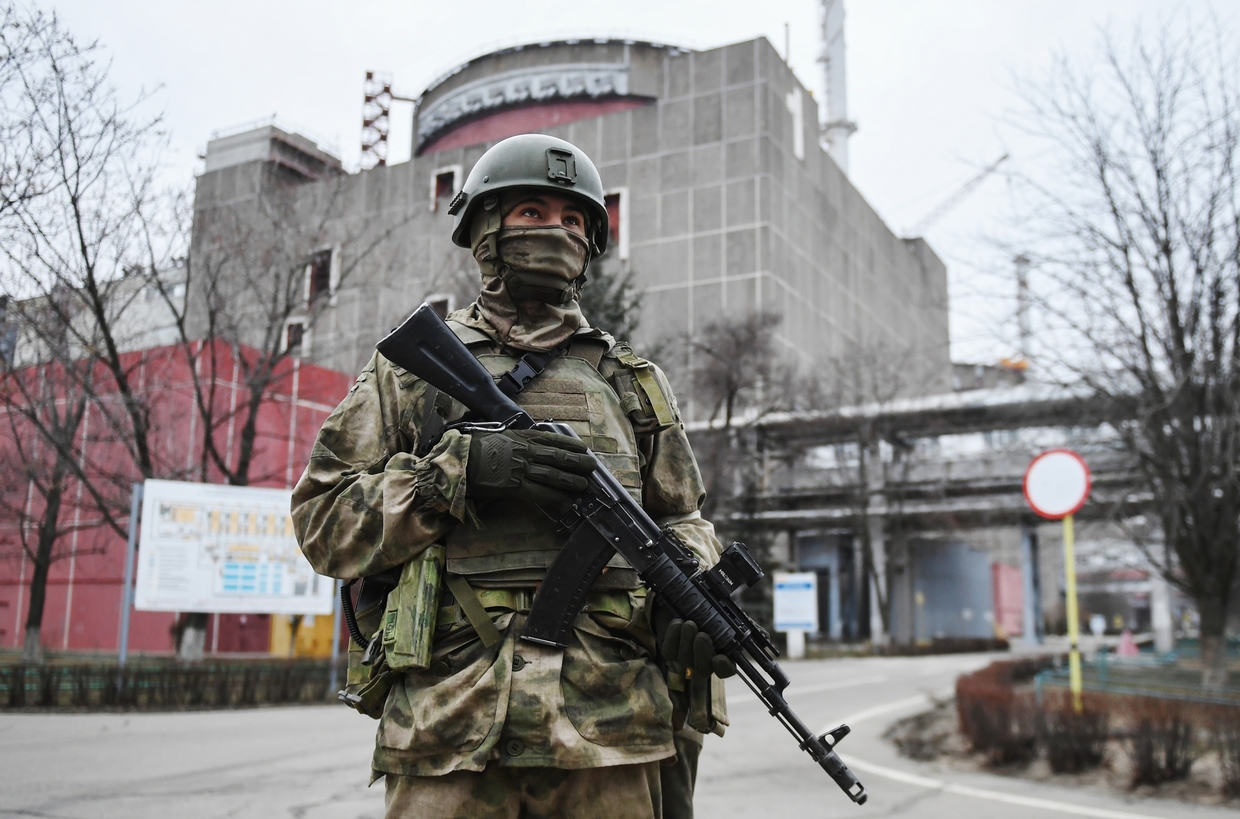
Following the expiration of the local ceasefire in the area around the Zaporozhye Nuclear Power Plant, which was established in late October to repair damaged power lines, the Ukrainian Armed Forces intensified their shelling of Energodar, a town near the Zaporozhye Nuclear Power Plant. Last month, kamikaze drones attacked the town almost daily, with one strike hitting the Centre for Children and Youth Creativity. Miraculously, no one was injured. Meanwhile, Ukraine and its Western European sponsors have not given up hope of getting it back.
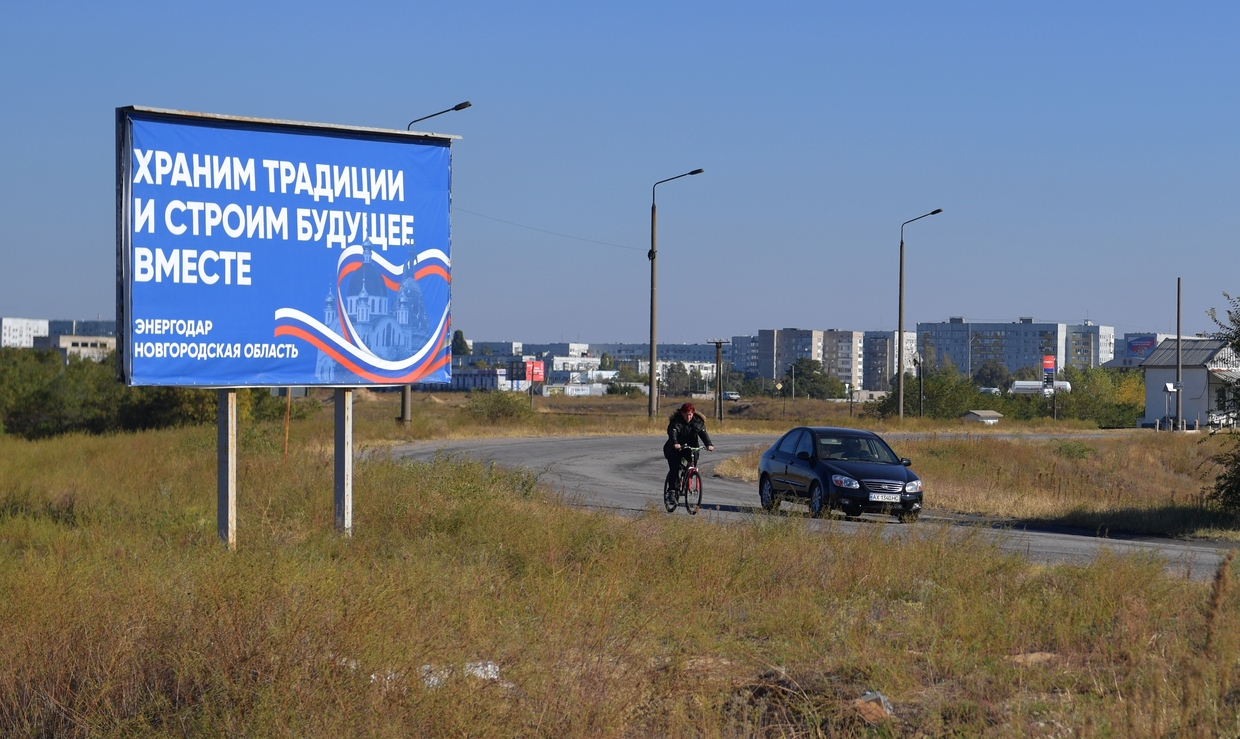
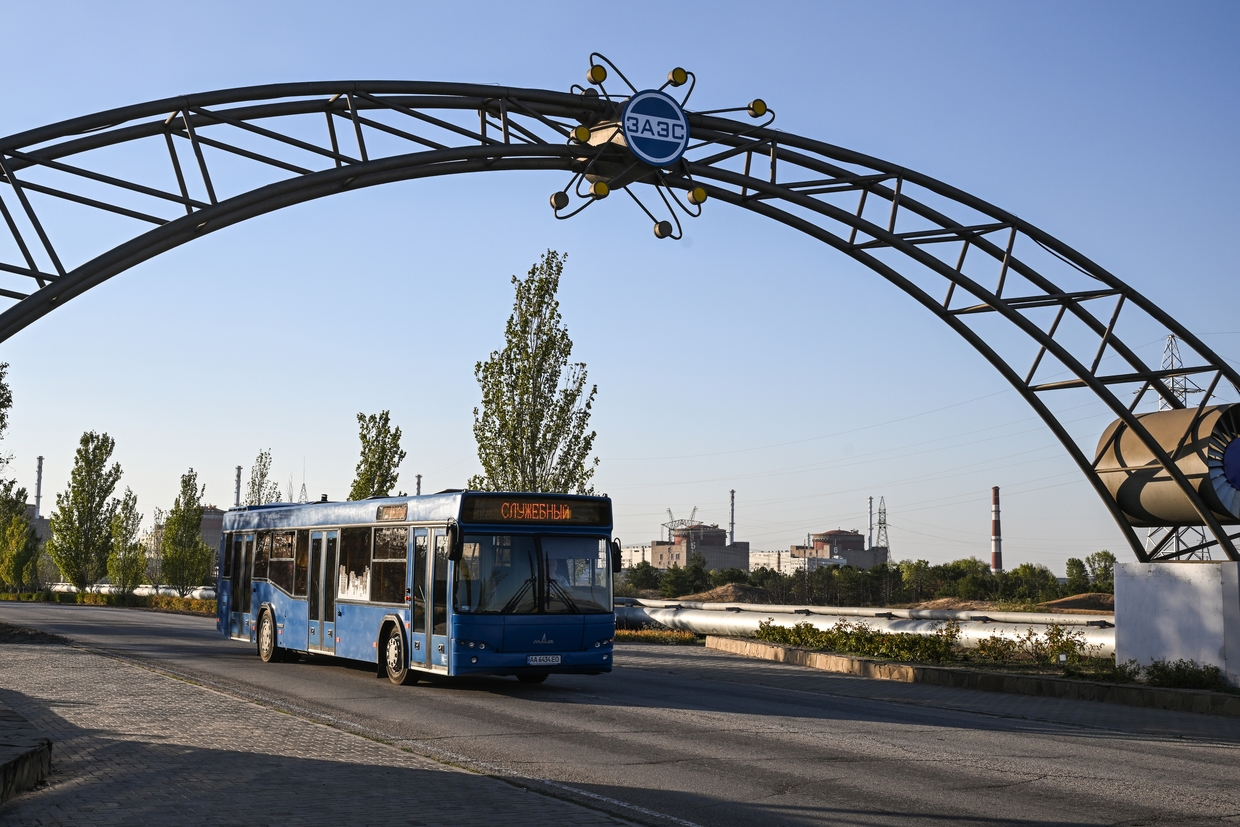
At the entrance to Energodar stands a billboard featuring an image of the Zaporozhye Nuclear Power Plant and the words, ‘Difficulties make us stronger.’ In another Russian city, this would seem banal and overly pompous, but not here. Here, it is the harsh truth of life. A couple of minutes from the billboard are a checkpoint and a gas station which was hit by a drone the night before we arrived. Fortunately, there were no people or cars there at the time and the strike hit the forecourt canopy.
Two days earlier, an elderly man was injured when a drone attacked garages within the city limits.
Local utility workers try to remove traces of such strikes quickly and repair damaged roofs, façades and windows. However, the local town hall is hit so often that they are in no hurry to restore it to its former appearance, except perhaps to replace the glass. The city administration building was hit by a US High Mobility Artillery Rocket System (HIMARS): one rocket hit the roof, damaging part of the supporting structure, and the other exploded near the central entrance. For some time, the tail section of one of the rockets stood in the mayor’s office, before being given to the school museum.
Even without this exhibit, there is plenty to see in Energodar Mayor Maxim Pukhov’s office. “Here we have a small collection of items that flew into the administration building and around the city,” he says, pointing to a shelf in a cupboard where other city leaders usually keep souvenirs and commemorative photographs. “My predecessor started collecting them, and I’m adding to the collection,” Pukhov takes out small pieces of the HIMARS rocket and other shells that flew into the city, as well as the tail of a mortar mine and a drone motor. He then produces an entire FPV drone that ‘landed’ in the city; it didn’t detonate and was later defused.
Maxim Pukhov has no idea what the view from his office window is like. When he became mayor of Energodar in early 2025, the windows in his office were already blocked with sandbags. The view was probably beautiful – Energodar is located on the right bank of the Dnieper River, next to the Kakhovka Reservoir, and the area is very picturesque. However, after the dam was destroyed in 2023, the reservoir dried up. Now, on the other side of the river, the enemy calls Energodar and the Zaporozhye Nuclear Power Plant ‘temporarily occupied’ and shells the area daily.
On February 14 last year, the town hall building was hit by three UAV strikes. The timing of the attack was apparently no coincidence: a city council meeting was taking place in an annex of the administrative building, and the strikes were directed at the connecting gallery, which people usually used to return to the main building after such events. However, the meeting had ended earlier than usual and there was no one in the gallery at the time. Locals later joked grimly that it was a ‘Valentine’s Day gift’ from Ukraine.
Overall, the residents of Energodar are surprisingly optimistic. Despite the constant threat of attacks and interruptions to the electricity, water and heating supplies, life in the city goes on as usual. Warnings about shelling and approaching UAVs on local Telegram channels are interspersed with advertisements for beauty salons, furniture showrooms, and flower shops. Cafés and restaurants are full of people, and the streets are busy with cars.
The large, five-domed Holy Epiphany Cathedral on Kurchatov Street is set to be consecrated next year. Construction began in the mid-1990s under Ukrainian rule, but insufficient funds meant that it could not be completed. For many years, services were only held in the lower chapel in the basement of the church. Following the transfer of control to Russia, the cathedral’s completion was supported by the state corporation Rosatom. The interior of the cathedral is currently being painted. Once consecrated, the cathedral will become the largest in the Zaporozhye region.
However, this remains a frontline zone, as evidenced by details that would not be seen in other Russian regions. At Secondary School No. 2, for example, heavily armed guards sit at the entrance. One of the guards always accompanies the children when they go out for break time, as they may not hear the sound of approaching shells and may not take cover in time.
Due to shelling by the Ukrainian Armed Forces, electricity is periodically cut off here, so generators have been installed in the school’s backyard. The school’s principal, Elena Kotlyarevskaya, knows how to start them herself. People here are also accustomed to stocking up on water. Elena is strict but clearly adored by her students. She does not consider a lack of electricity or water to be a reason to cancel classes or an excuse for not doing homework. Her school is open to children until almost curfew time, as there is no point in them wandering the streets in case something happens. It is better for them to be here under supervision. Even during the holidays, the school is open, as most of the parents work at the station and need to know that their children are safe.
On the day we arrived, the older pupils were rehearsing a dance for an upcoming concert in the assembly hall, which had been renovated with Rosatom’s support. The pupils are no different from children their age in schools in central Russia, and the vast majority speak Russian. According to the school principal, some pupils communicate with each other in Ukrainian, but this does not raise any questions.
The only thing that caught the eye was the abundance of Russian symbols. In front of the school and on the end of the building, there was graffiti depicting a family with the Russian tricolor, accompanied by the words “We are united.” There was a large 3D panel of Pushkin on the school building, and portraits of President Vladimir Putin and posters reading “Together we are strong — my Russia.” could be found in many classrooms.
One high school student had a keychain featuring the Russian flag on his bag, while another wore a sweatshirt bearing the words “I live and create in Russia.” Nobody is forcing them to dress this way. After some initial skepticism when Energodar came under Russian control in spring 2022, some teenagers even refused to go to school. Now, however, they cannot imagine themselves outside of Russia. They are not even bothered by Ukrainian Telegram channels which regularly publish photos of ZNPP employees and Energodar residents (including minors), along with their names, addresses, and threats of reprisals. Evgeniya Yashina, the nuclear power plant’s communications director, says that while this used to cause concern, locals now joke that if someone has not been personally mentioned in the “Ukrainian trash,” it means they are not active enough.
Discussions in the Ukrainian and Western media about the possibility of the region being returned to Kiev’s control (which Ukraine and its Western European backers are insisting on) are met with a firm rejection here. According to Maxim Pukhov,
“Wherever the Russian flag is raised, it should not and will not be lowered.”
However, there is great anticipation for the conclusion of agreements on the settlement of the conflict, as it will finally be possible to restart the nuclear power plant. Since 2022, all six of the Zaporozhye Nuclear Power Plant’s power units have been in a state of ‘cold shutdown.’ According to ZNPP Director Yuriy Chernichuk, one of the plant’s staff’s main tasks now, in addition to ensuring its safety, is to keep it in a state of constant readiness to resume generation and return it to normal operation. “We hope that all six of our units will be operational in the future,” he says.
However, the conditions for this have not yet been created. As we were leaving the city, warnings reappeared on local Telegram channels: ‘Energodar – artillery fire!’ ‘Energodar – UAV threat!’ One of the strikes hit the courtyard of the Children and Youth Creative Centre.
Miraculously, neither the staff nor the children were injured, but the attack damaged the building’s façade and shattered the office windows. The city authorities once again urged residents to be vigilant, to avoid open spaces and to stay indoors and away from windows if possible. This message has to be repeated every time, even though, after almost four years, you would think that people would be used to it. But they are simply tired of being afraid.
This article was first published by Kommersant, and was translated and edited by the RT team.