• About
  • Advertise
  • Privacy & Policy
  • Contact
Tuesday, February 24, 2026
  • Login
  • Register
thehopper.news
  • Home
    • Home
    • About
  • Analysis
  • Regions
    • Discussion
    • Africa
    • Asia-Pacific
    • Europe & NATO
    • Americas
    • Russia & Eurasia
    • Middle East & North Africa
  • Themes
  • Intel & Security
  • Foreign Affairs
  • Geopolitics
  • News
    • All
    • Politics
    • World

    The Pentagon is looking to acquire killer AI. Should we be worried?

    France curbs US envoy’s government access

    France curbs US envoy’s government access

    India releases new anti-terror policy

    India releases new anti-terror policy

    Cooperation with BRICS will open new doors – Madagascar president

    Plot to assassinate Serbia’s Vucic thwarted – Interior Ministry

    Plot to assassinate Serbia’s Vucic thwarted – Interior Ministry

    Chad shuts border with war-torn neighbor

    Chad shuts border with war-torn neighbor

    CIA tip ‘instrumental’ in killing of Mexican drug lord – media

    CIA tip ‘instrumental’ in killing of Mexican drug lord – media

    NATO nations could transfer nuclear bomb to Ukraine – Russian intelligence

    Zelensky claims West could be using elections to oust him

    Zelensky claims West could be using elections to oust him

    Russian warship participates in Indian naval drills (VIDEO)

    Russian warship participates in Indian naval drills (VIDEO)

No Result
View All Result
thehopper.news
No Result
View All Result
Home News

Russian scientists grow watermelons in Antarctica

by Admin
July 31, 2023
in News, Politics, World
0
Russian scientists grow watermelons in Antarctica
27
SHARES
108
VIEWS
Share on FacebookShare on Twitter

Published: July 31, 2023 3:39 pm
Author: RT

The researchers hope to eventually be able to grow other fruits and wild berries at all polar bases

Russian polar explorers have successfully grown a batch of watermelons at the Vostok station in Antarctica, the coldest place on Earth, according to a statement published by the Arctic and Antarctic Research Institute (AARI).  

“The results of the experiment are impressive – we managed to grow the southernmost watermelons in the most severe conditions of Antarctica,” said leading AARI geophysicist Andrey Teplyakov, who led the project at the Vostok station. “The taste and aroma are no worse than the ones we have at home! The size of the fruits is up to 13 cm in diameter, and their weight is up to 1 kg,” he said. 

The experiment was a joint project between the AARI and the Agrophysical Research institute and the Institute of Biomedical Problems of the Russian Academy of Sciences. 

In its statement, the AARI explained that favorable conditions for the plants, such as air temperature and humidity, were created by scientists with the help of a phytotechnical complex that was specially designed by the Agrophysical Institute for the Vostok station. 

“When growing plants, a thin-layer soil substitute, nutrient solutions and specially selected lighting were used. Two varieties of early ripening watermelons, which are able to adapt to low atmospheric pressure and oxygen deficiency, were planted in early April. The flowers were pollinated by hand at the end of May, and in July the polar explorers were able to taste the first fruits. The whole process took 103 days,” the statement reads. 

AARI Director Aleksandr Makarov noted that aside from the scientific interest and practical benefits of having fresh vegetables, berries, and greens, the joint project had “a number of important additional advantages.” 

Read more

RT
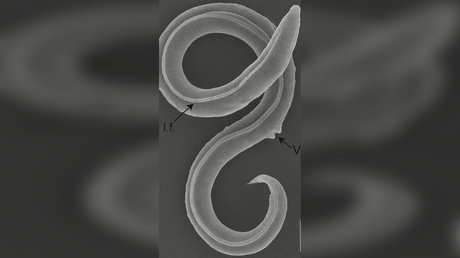
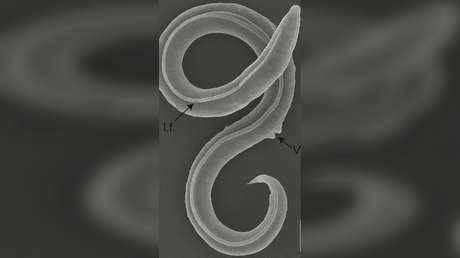
Lifeform revived and reproducing after 46,000 years in permafrost

“The greenhouse at the station has a positive effect on the emotional state of polar explorers,” Makarov said, noting that many of the researchers spend months in an isolated team, in conditions of polar night, low temperature and limited living space. 

“Introducing the practice of growing plants at all Russian polar stations has been discussed for a long time, but this requires an accurate calculation of the effectiveness and cost of the project,” Makarov said. 

The experiment dubbed ‘Plants’ was launched at Vostok in February 2020. Since then, the scientists have successfully worked out a system for growing 80 varieties of vegetables, including tomatoes, peppers, dill, spinach, collard greens, and others. The team’s next goal is to develop the technology for cultivating blackberries, blueberries, and strawberries.


Full Article

Tags: Russia Today
Share11Tweet7
Previous Post

Severe floods hit typhoon-damaged Beijing

Next Post

Woman escapes from ‘maniac’ after 14 years in captivity

Admin

Admin

Next Post
Woman escapes from ‘maniac’ after 14 years in captivity

Woman escapes from ‘maniac’ after 14 years in captivity

thehopper.news

Copyright © 2023 The Hopper New

Navigate Site

  • About
  • Advertise
  • Privacy & Policy
  • Contact

Follow Us

Welcome Back!

Login to your account below

Forgotten Password? Sign Up

Create New Account!

Fill the forms bellow to register

*By registering into our website, you agree to the Terms & Conditions and Privacy Policy.
All fields are required. Log In

Retrieve your password

Please enter your username or email address to reset your password.

Log In

Add New Playlist

No Result
View All Result
  • Home
    • Home
    • About
  • Analysis
  • Regions
    • Discussion
    • Africa
    • Asia-Pacific
    • Europe & NATO
    • Americas
    • Russia & Eurasia
    • Middle East & North Africa
  • Themes
  • Intel & Security
  • Foreign Affairs
  • Geopolitics
  • News

Copyright © 2023 The Hopper New

This website uses cookies. By continuing to use this website you are giving consent to cookies being used. Visit our Privacy and Cookie Policy.